


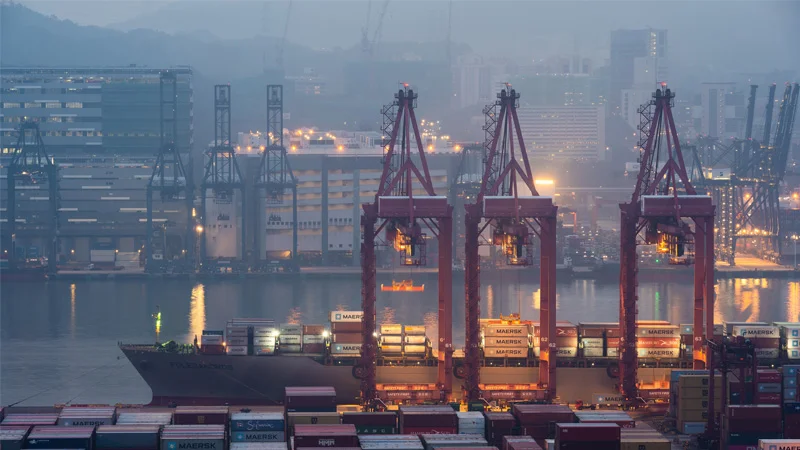


Nearly three weeks ago, UBS analyst Pierre Lafourcade reactivated his desk’s supply-chain watch coverage after stress across global supply chains was “rising at its fastest pace since the early pandemic.” That warning is now increasingly getting louder by the week, with ongoing disruptions around the Hormuz chokepoint and the resulting energy supply shock, pushing up input, freight, and other logistics costs across the global economy.
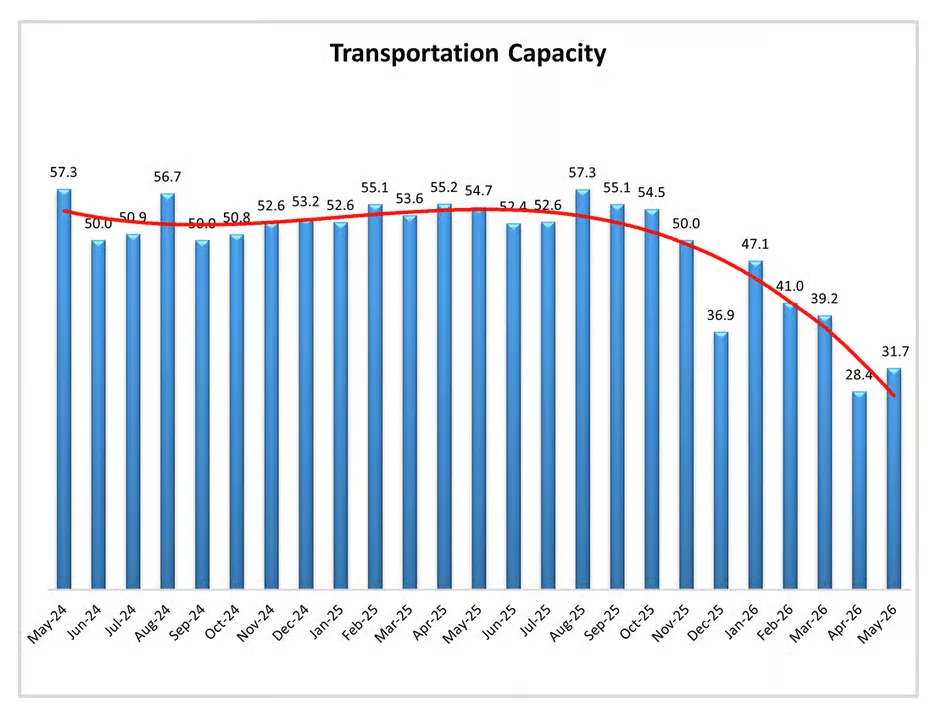
Weeks after Lafourcade’s warning, which can be read here, the May 2026 Logistics Managers’ Index Report showed transportation costs surging to the highest level in the index’s nearly 10-year history, while transportation capacity fell and transportation utilization remained elevated.
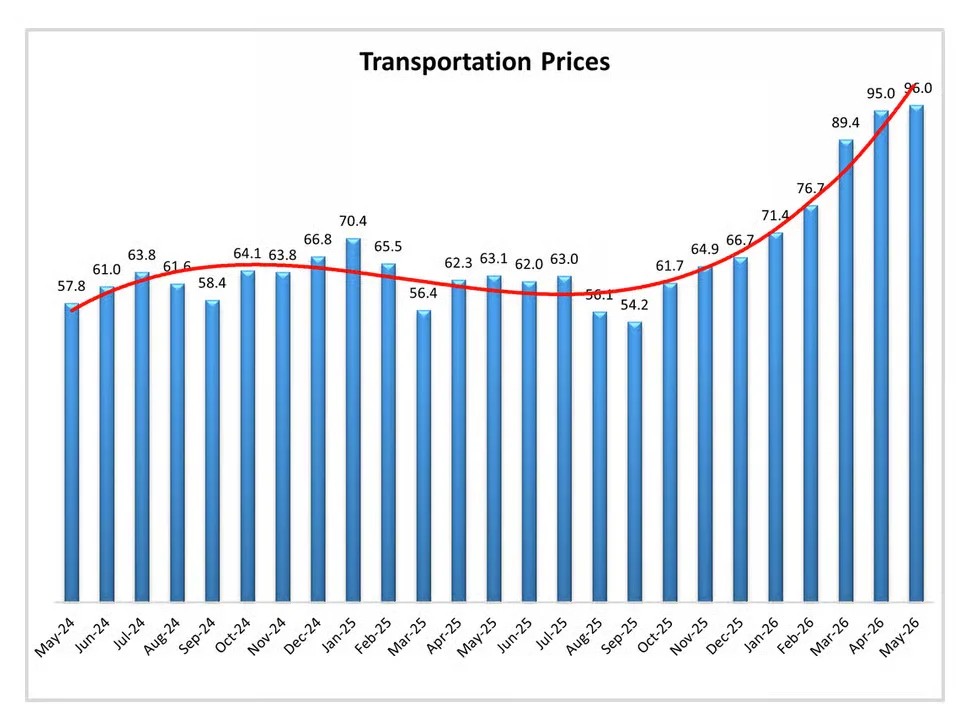
“Supply chains have been resilient despite these ongoing disruptions. However, in the past this level of elevate cost has eventually led to significant levels of supply-driven inflation,” the report stated.
Capacity is quickly contracting…
… and utilization is elevated, according to the report.
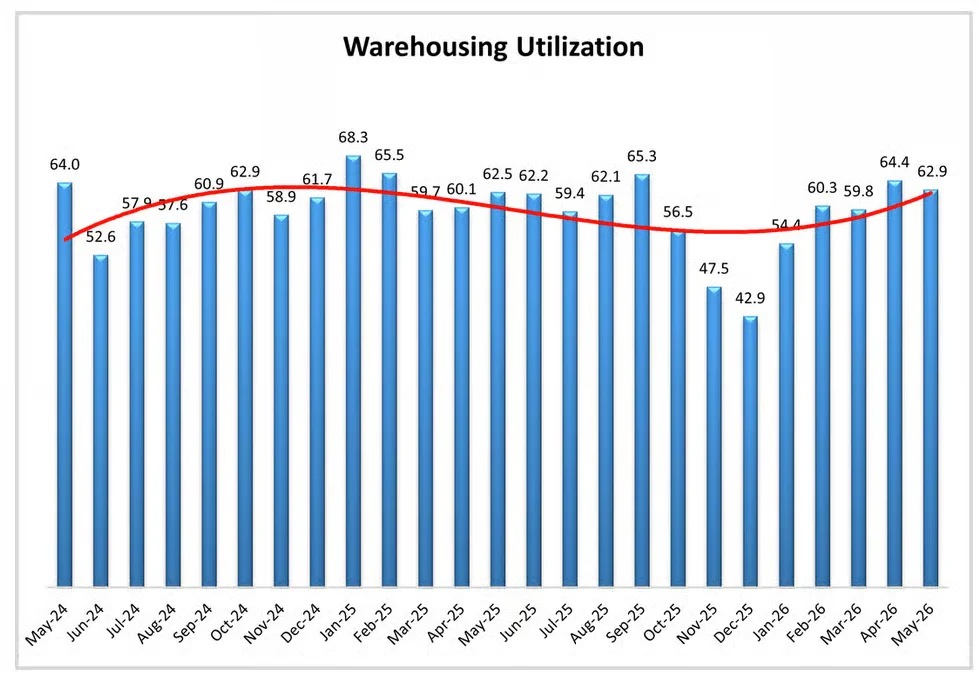
As a result, logistics costs are at “the highest level since March 2022,” the report noted, adding, “This previous peak was part of a run of high logistics inflation that led to the highest U.S. inflation in 40 years.”
The report warned, “Supply-driven inflation is more difficult for the Fed to combat than demand-driven inflation because higher interest rates cannot create greater supply (in some cases, they actually may hinder supply). If logistics costs remain elevated, it is likely there will be at least some inflation. Respondents seem to be predicting with this, forecasting aggregate logistics costs will increase at a rate of 253.6 over the next 12 months.”
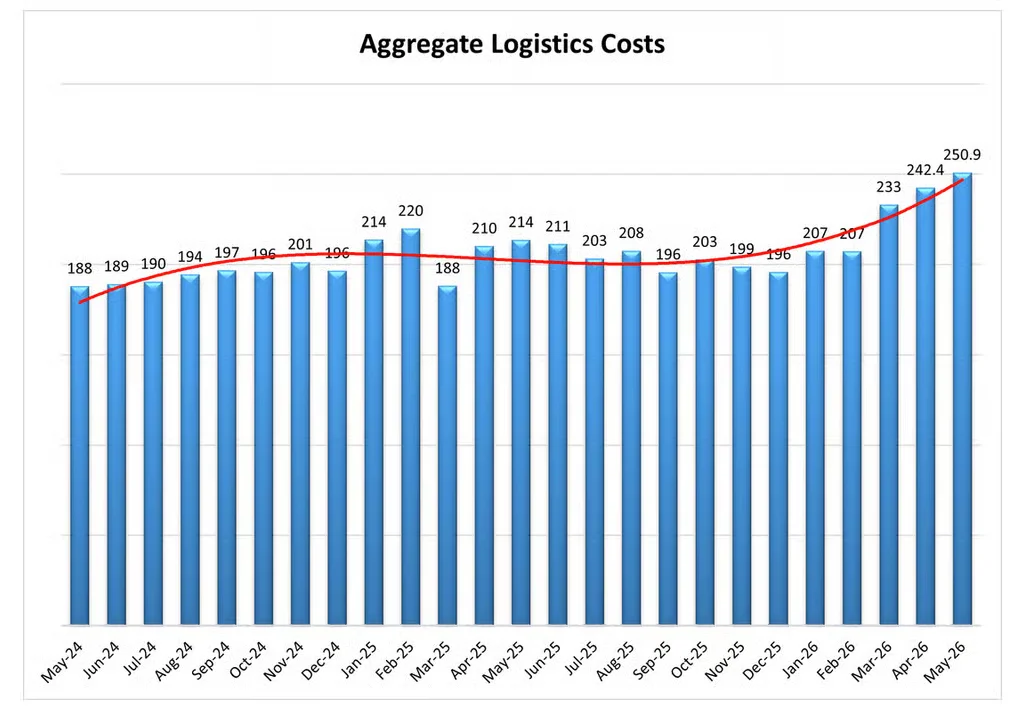
Bloomberg was the first to cover the Logistics Managers’ Index Report on Thursday. This reporting only added to UBS analyst Lafourcade’s mid-May report that global supply chain stress was quickly emerging, with the Global Supply Chain Stress Index rising by 1.2 standard deviations in March and April, the second-largest two-month jump since July 2020.
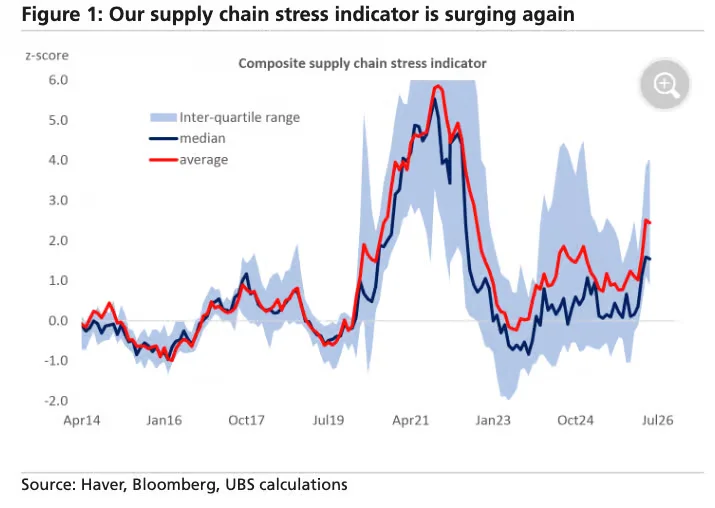
Our read-through is that the potential for a supply-side inflation shock feeding into the economy could create a headache for the Federal Reserve. Higher rates would be the standard cure, but monetary policy cannot create trucking capacity, reopen trade chokepoints, lower diesel prices, or fix global shipping disruptions. That raises the risk of sticky inflation even as growth slows. This is why the Trump administration is working quickly to resolve issues in the Hormuz chokepoint.
On Wednesday, the Fed’s Beige Book cited mounting concern among the business community about supply and freight costs.
Support Alex Jones by picking up an all-new Alex Jones Live t-shirt, or an awesome Trench War Dagger at TheAlexJonesStore.com.





One Response
FEAR! UNCERTAINTY!! DOUBT!!!
🤑 BUY NOW AT ALEX JONES STORE 🤑