


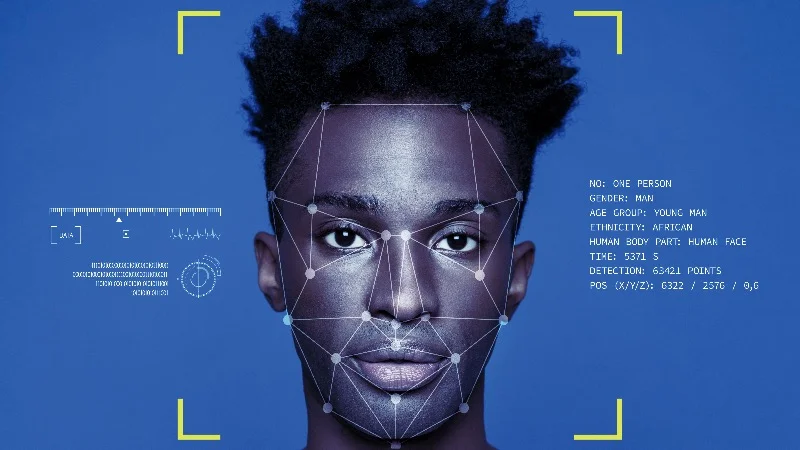


The surveillance grid may become more comprehensive in Kenya as the African nation mulls connecting its national identification database to security camera footage.
The nexus of Kenya’s civil registry database with CCTV networks would span six cities. It aims to provide law enforcement more tools to combat crime.
“The proposed CCTV network will be operated by the National Police Service, and have access to the National Registration Bureau database through an integration by the Ministry of Interior, Interior Cabinet Secretary Kipchumba Murkomen said in an interview reported by Kenyans,” Biometric Update said Friday. “The Ministry announced its intention to roll out surveillance cameras in Nairobi, Mombasa, Kisumu, Nakuru, Eldoret and Nyeri earlier in June. The Eastleigh Voice reports that the Nairobi deployment is expected to become operational three to six months after the procurement is complete.”
While being able to identify individuals within surveillance footage could aid investigations, it would also treat every individual as a potential suspect before a crime has even been committed.
Technologies which bring live time facial recognition to security cameras shifts surveillance footage from being a record of the past to an active control grid where every human movement can be chronicled and categorized.
Such as system is slated for eminent launch in the African nation.
“Kenya’s government is in the final stages of procuring the facial recognition surveillance system, according to Murkomen, and is hoping to complete the tender for up to 25 billion Kenyan shillings (approximately US$190 million) within two months,” Biometric Update said. “The government plans to integrate system with the Integrated Command, Control and Communication Centre (IC3) as part of an overall upgrade. The NPS also launched a facial recognition system using NEC technology within the IC3 for its CCTV network along major roads and highways back in 2018.”
Tasmania has taken the opposite approach as Kenya. It’s government recently removed 468,000 driver’s license photos from a national facial recognition database.
“Pulse Tasmania reports that the images were uploaded to a segregated section of the National Driver License Facial Recognition Solution between December 2018 and December 2020, without the consent of license holders and before federal laws were in place to govern the system,” Biometric Update said.
Once it is tested and normalized in the third world it may have a better chance of being adopted in the West.
“Law enforcement is restricted from populating facial recognition databases with data from civil IDs in many countries around the world, on grounds that it treats the entire population as suspects. UK police appear to be gaining the power to search civil databases, however,” Biometric Update said.
Linking security footage to facial recognition data without the justification of a criminal investigation is currently being debated in Ireland.
Legal experts and civil rights campaigners are saying that a law which would permit the Irish police to use retrospective facial recognition “lacks legal clarity.”
“The Irish Parliament Upper House is currently debating the Garda Síochána (Recording Devices) (Amendment) Bill 2025, which introduces new powers for biometric analysis by the Gardaí, including the ability to record people in public spaces using body-worn cameras and drones, and to track people through CCTV and recorded footage,” Biometric Update said Friday. “The regulation, however, raises ‘serious concerns’ due to the powerful surveillance tools given to the Irish police, according to Róisín Á Costello, assistant professor of law at Trinity College Dublin and Olga Cronin, senior policy officer at the Irish Council for Civil Liberties (ICCL). The main issue is the introduction of a novel term, ‘biometric analysis,’ which would allow the police to categorize people based on their biometric data, use biometrics to identify them and use the biometric data of known individuals to ‘localize’ them.”
It is not just faces which are being tracked. Alex Jones Live recently reported how WiFi and Bluetooth devices are now being tracked in a similar manner to how license plates are tracked by license plate reading cameras. Instead of recording footage of a license plate however, these systems pick up and record the unique numbers which are continuously transmitted by wireless devices.
As AI systems become advanced enough to sift through all the collected data, an extremely detailed report of every human activity can be automatically generated in live time.




2 Responses
They will utilize this system everywhere, except for the real hoods in America of course. So, if you want to regain some freedom, move to the drug infested, graffiti covered, and trash strewn slums to even have a chance.
Spoken like a true
N
I
G
G
E
R
🙊