


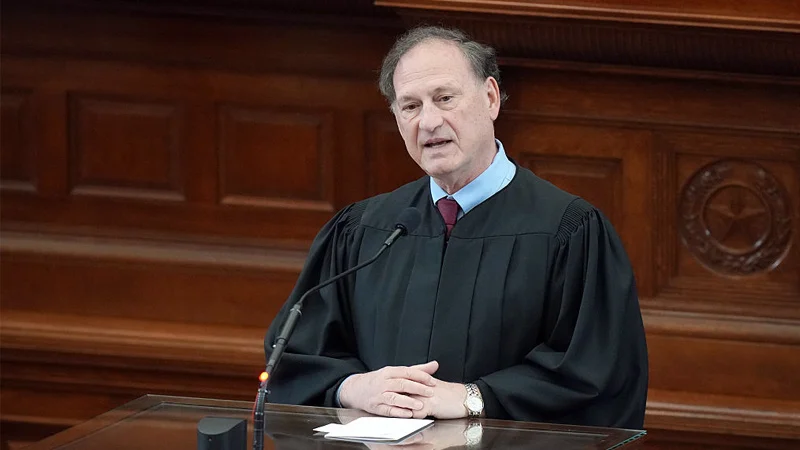


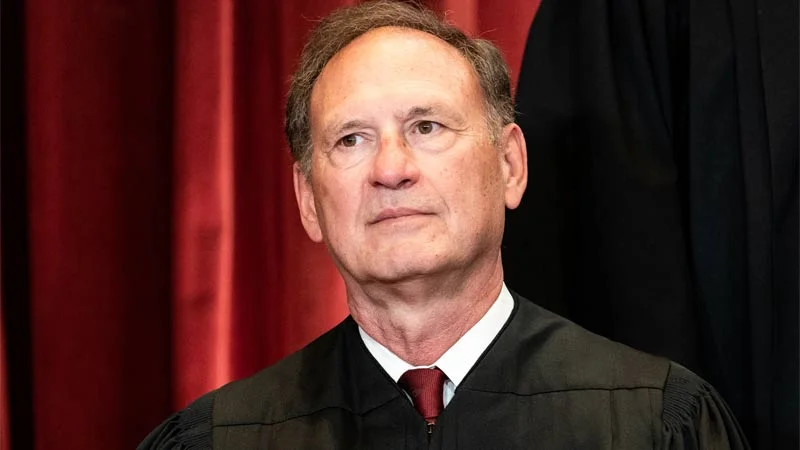
Supreme Court Justice Samuel Alito issued a scathing rebuke of the Court’s ruling Tuesday upholding birthright citizenship under the 14th Amendment, calling the decision a “mistake” that would negatively affect the country for years to come.
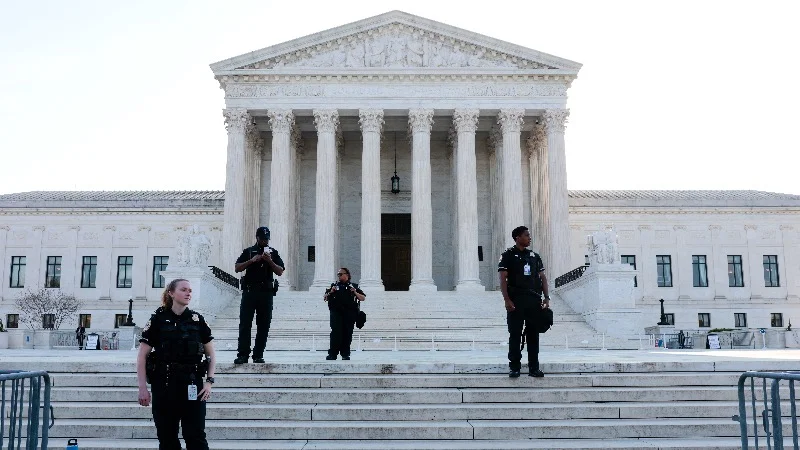
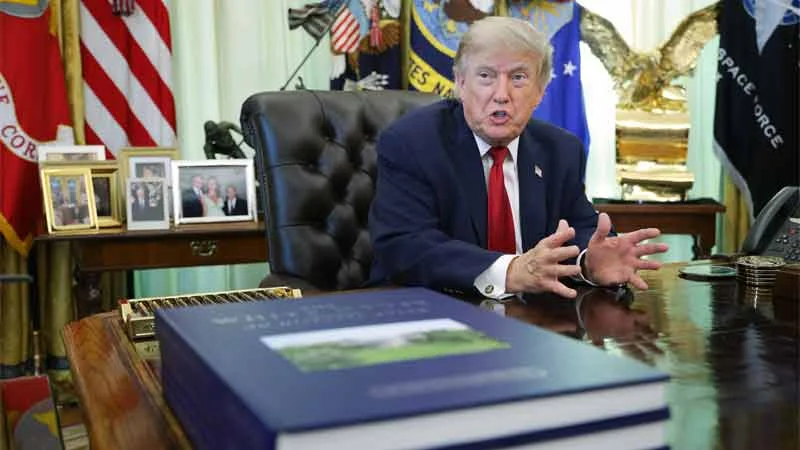
In a 6-3 decision Tuesday striking down President Donald Trump’s Executive Order restricting birthright citizenship, SCOTUS ruled that children born in the United States to parents temporarily or unlawfully in the country are citizens at birth.
In his majority opinion, Chief Justice John Roberts, joined by Justices Ketanji Brown Jackson, Sonia Sotomayor, and in part by Brett Kavanaugh, wrote that “children born of parents unlawfully or temporarily present in the United States” “satisfy both elements of the Citizenship Clause.”
“Under the Constitution, they are citizens at birth,” he added.
Justice Amy Coney Barrett sided with liberals on the decision, while Justices Alito, Neil Gorsuch and Clarence Thomas dissented.
In his 39-page dissent (beginning on page 153), Alito warned, “This is one of the most important decisions in the history of the Court, and in my judgment, the Court has made a serious mistake. “
“As interpreted by the Court today, the Fourteenth Amendment confers citizenship on virtually everyone who happens to be born in this country, including the children of ‘birth tourists,’ women who come here solely for the purpose of giving birth to a child and then promptly return home.”
“Careful analysis of the text of the Fourteenth Amendment and the process that led to its adoption shows that it does not degrade the concept of United States citizenship in this way,” he wrote. “Instead, the Fourteenth Amendment confers citizenship on only those children who, at birth, owe allegiance solely to this country.”
Alito wrote that Congress should address the issue of who may be a citizen, and that misapplication of the 14th Amendment caused an immigration crisis in America, saying, “children are not responsible for their parents’ violation of our immigration laws, and their plight is the result of a long period during which a coterie of actors… sent the message to would-be immigrants that our immigration laws should not be taken too seriously.”
“This message, coupled with ineffective or unenthusiastic enforcement, spurred massive illegal immigration and the growth of a large contingent of people who were born here to mothers unlawfully present in this country.”
Alito added that the Court “should not adopt an erroneous interpretation of the Fourteenth Amendment simply out of fear of the consequences of ‘rocking the boat’ or as a reaction to current immigration policy.”
“Nor should we take the position that our hands are tied,” he wrote, adding, “too much is at stake.”
“United States citizenship is precious,” he noted.
Alito next ran down the history of citizenship, and delved into the phrase “subject to the jurisdiction of,” pointing out that at one point American “tribal Indians and their children, although born on US soil, were not citizens.”
“As a result of the events of the past 50 years, the United States now has a huge contingent of people who entered or remained in this country illegally, as well as a large group of people who were born here to such parents,” he wrote elsewhere in his opinion. “The Court’s interpretation of the Fourteenth Amendment makes all the members of this latter group citizens. Many of those who have grown up here now have a strong moral claim to be allowed to remain, but that is a matter that the Fourteenth Amendment, when properly interpreted, leaves to Congress.”
“The Court’s interpretation is not only contrary to the original meaning of the Fourteenth Amendment, it produces grotesque results,” he continued. “While foreigners who wish to immigrate lawfully must sometimes wait for many years, a child born here to a birth tourist is automatically a citizen.”
Alito also highlighted the national security implications of the Court’s ruling.
“Suppose that country is a strategic adversary or enemy of the United States. Suppose the child never visited the United States while growing up and was inculcated with hatred of this country. According to the Court, that person is a citizen of the United States. He can enter and leave the country as he pleases. He can travel the world on a United States passport. Even if he plots to harm this country, he cannot be deprived of his status as a citizen, at least under current precedent.”
“The Court’s interpretation preserves a powerful incentive to enter or remain in this country illegally,” he wrote, noting that “Immigrants naturally prefer affluent countries where economic opportunities are available,” and that, besides Canada, the US is the “only affluent nation where birth alone is enough to establish citizenship.”
Concluding that the court was misinterpreting the meaning of the 14th Amendment and imposing a rule outside its scope, Alito wrote, “In my judgment, the Court has made a mistake that will seriously affect the country’s future.”
Justices Gorsuch and Thomas also wrote dissenting opinions, with the latter penning a 91-page dissertation on why the Court’s majority was misinterpreting the 14th Amendment.
The landmark decision came as media outlet NPR published an article on Tuesday erroneously claiming Justice Alito had retired, before quickly removing it from their website and retracting the story.
Visit TheAlexJonesStore.com to support Alex Jones and the crew, and pick up an all-new Dual Carbon Platinum Gravity-Fed Water Filter System, or the popular T-3 Trifecta Iodine Tincture!

One Response
Alito and Thomas and Gorsuch are the real pro-America conservatives on the SC bench.
Roberts is a closet queer.