


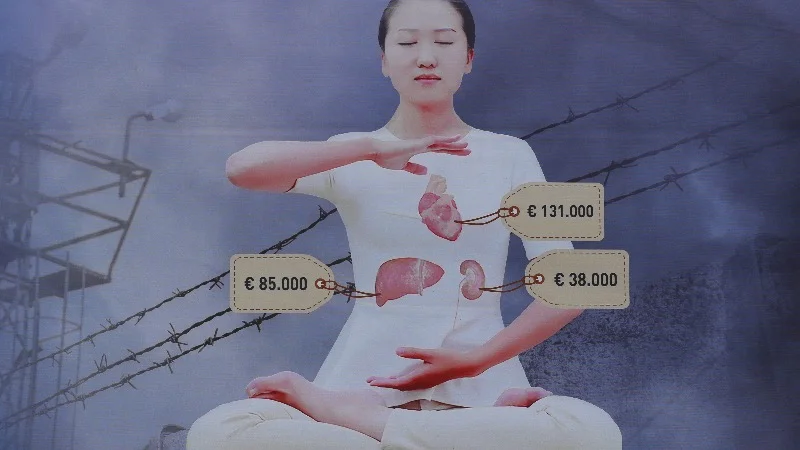


(LifeSiteNews) — A July 8 New England Journal of Medicine article proposes the direct killing of people via organ donation.
In the article “Contextualizing the Dead Donor Rule in an Era of Voluntary Euthanasia,” Dr. Robert Truog and colleagues say that since we’ve already redefined death for our current system of organ harvesting, allowing explicit death via donation is just the next logical step.
The authors’ argument deals with the Dead Donor Rule (DDR), an ethical standard that says patients must be dead before organ procurement and that clinicians must not cause death by organ retrieval. This rule is supposed to maintain the public’s trust in our organ donation system.
But, according to Truog and colleagues, the dead donor rule has already become stretchy:
Though the DDR is considered the “ethical linchpin” of transplantation, it has thus functioned less as a moral absolute than as a moral anchor, whose application requires ongoing interpretation and adaptation.
The authors cite the example of “brain death,” saying that brain death isn’t actual biological death, but serves as an example of how we can change the definition of death to suit our needs:
Despite philosophical and biologic uncertainty, brain death was adopted into law and medical practice with the 1981 enactment of the Uniform Determination of Death Act, which defined death as the irreversible cessation of all brain functions. Accumulating clinical experience, however, exposed inconsistencies in this integrative concept of brain death. [Dr. Allan] Shewmon reported many cases of prolonged biologic survival after the determination of brain death. These patients were able to grow, assimilate nutrition and eliminate waste, recover from infections and wounds, even gestate a fetus. Amid uncertainty, organ donation continued, revealing a deeper conceptual pivot. The DDR shifted the determination of death away from strictly biologic criteria toward adherence to diagnostic criteria that were enumerated and endorsed by a definitional authority. The Death Requirement and trust in the organ-donation system were not violated if the new concept of death was accepted in social and legal standards. Such contextualization rendered the DDR a flexible moral safeguard, upholding the commitment not to take organs from living people even as the meaning of “death” itself was revised.
READ: ‘Dirty plague rat’: Trauma surgeon describes how unvaccinated were treated during COVID pandemic
When you signed up to be an organ donor, did they tell you that the meaning of death itself had been revised? Most people registering as organ donors believe that they will be cold, gray, and stiff when they donate their organs, but this is never the case. Organs very quickly become unsuitable for transplantation in the absence of circulation: corpses cannot donate viable organs. So, people in a deep coma (with beating hearts) were redefined as being “brain dead,” meaning that the definitional authorities deemed them to be “dead enough” to become organ donors.
The New England Journal of Medicine article also discusses the fact that Donation after Circulatory Death (DCD) organ donors also don’t actually meet the U.S. legal criteria for death, which require an irreversible loss of circulatory and respiratory function:
Debate persists over whether DCD practices truly uphold the DDR, particularly in that permanence is not necessarily equivalent to irreversibility. In DCD, death occurs not because resuscitation is impossible, but because it is intentionally withheld, in accordance with patient values, placing patients on a trajectory toward death, which is considered “irreversible” because it will not be reversed. This shift from a biologic to a procedural conception of death again contextualized the DDR, aligning it with general social and ethical understandings rather than empirical finality.… Again, the DDR persists not as an immutable boundary but as a moral framework whose ethical force is maintained by contextualization.
When you registered as an organ donor, were you told of this shift from a biological to a procedural conception of death? That your death would not actually meet the Uniform Determination of Death Act’s legal standard but that you would be considered to be “dead enough” to become an organ donor via “contextualization”?
The article’s authors also say that organ donors all end up dead anyway, so the precise moment of death doesn’t really matter:
In death by organ donation, the patient’s authorization, experience, and outcome are not altered by whether death occurs moments before or during organ retrieval. Ethical focus should therefore shift away from identifying a precise moment of biologic death and toward respecting patients’ autonomous decisions, ensuring that safeguards against coercion and exploitation are robust, and advocating for a transparent and publicly accountable process.
Transparency? Currently, organ donors receive absolutely no transparency about how their deaths will be determined prior to organ donation. No organ donor is ever given the information that any reasonable person would want to know in order to give fully informed consent. Do we really think the process will be transparent and publicly accountable going forward?
Dr. Truog and colleagues say that the ways we are already redefining death for organ donation justify their idea of plunging ahead and allowing direct killing via organ harvesting: “Although death by organ donation may be viewed as a departure from the DDR … we interpret it as consistent with a historical pattern of recontextualization.”
READ: Half of SIDS cases occurred within 48 hours of vaccination, former police detective says
So, because historically we have gotten away with redefining living people as being dead enough to become organ donors, apparently we can now openly call for euthanasia via organ harvesting. This process is also known as the slippery slope.
Rather than continuing to justify these ever-expanding definitions of death for the sake of organ donation, we need to return to recognizing death as a biological reality. And we need to find new, ethical solutions for people with organ failure that don’t involve killing.



8 Responses
The only other alternatives are animal organs, completely artificial organs and death. Death is inevitable, regardless. So far, artificial organs are mainly looked at as temporary means of keeping someone alive for a live donor. Sometimes I feel, with the possible exception of kidney transplants, that organ transplants in general are a slippery slope.
If you had your status as a ‘No’ to organ donation. Wherever in your state that procrsses it. DMV for my staye. Recheck every so many years. Especially when they chamge or upgrade the databases. Your ID/ DL isn not enough. Wtch it in stone.
Those of youbwhi donate check in woth the law of yourstate. Being in a coma.after tauma ia enpugh to gut. This business is tpo lucrative for hospital.chains and certain doctors to give a damn aboit ethics. This article.has proven one thing: you’re.on your own.
Good points, but need to use the ‘ole editor.
My father recently died. He was an organ donor. There was no hope of recovery, and he had lost all high brain functions. The process was this: he was removed from life support. If he died within two hours, his organs could be harvested; otherwise, he would be brought back to ICU to die. He lived for four hours. I wish that they could have ended his life and harvested his organs, which was his wish (in addition to not wanted to be kept alive via machines, when there was 0 hope of recovery). It was horrible to watch him die over four hours. I understand the moral implications and negative incentives, but at least for those in my Dad’s condition, death for organ donation is appropriate.
Organ donors are always alive. Brain is still active for another ten minutes after heart stops. You’ll feel it all.
This bothers me a lot. My mother was an R.N. in the 1970s/80s. I remember how she told me to keep talking or singing to someone who was in a coma, that people in comas can come out of it sometimes.
George Carlin: Do you honestly believe that if a paramedic finds that card on you in an automobile accident, he’s going to try and save your life? Bullsh@@, he’s looking for parts, man!
Just tepl them you’re not arguing anymore to deaf ears. When they go to far, just tell them you made up your own definitions and they’ll be involuntary donors too.
Stop wasting time trying to debate liars, swindlers, and thieves.