


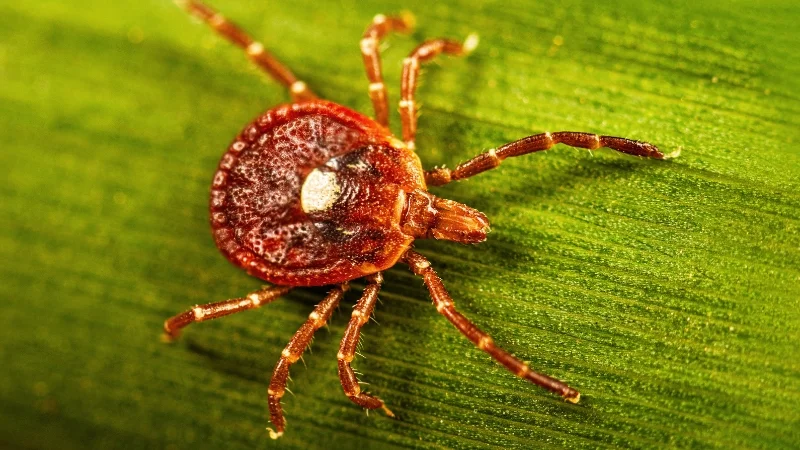


In some states as many as 1 in 4 adults may carry antibodies for a tick-borne meat allergy, according to new research.
Alpha-gal syndrome has been estimated to affect around 450,000 people in the US, but this new research indicates that many more people are likely to have been exposed to bites from the tick that causes the condition.
The condition is associated in particular with bites from the lone-star tick and causes sensitization to a sugar molecule in red meat—beef, pork and lamb—that can, in some cases, prove fatal.
The first documented fatality in the US occurred in 2024, when an otherwise healthy 47-year-old man died after eating a hamburger at a barbecue.
Science website Medical Xpress explains the new research: “To assess the risk of alpha-gal syndrome, researchers tested 3,000 blood samples collected between November 2024 and April 2025 from residents of 10 states.
“Results showed that the percentage of people carrying alpha-gal antibodies was highest in states where lone star ticks are well established.
“Arkansas had the highest levels, with nearly 1 in 3 residents (31%) carrying alpha-gal antibodies. Missouri followed with 26% of residents ‘sensitized’ to alpha-gal.
“All told, about 1 in 4 people (24%) could be expected to test positive for alpha-gal antibodies across the five states with the highest prevalence—Arkansas, Kentucky, Missouri, Tennessee and Virginia.”
Older people (aged 55-64), men and people living in the rural areas were most likely to carry the antibodies.
The researchers now want to explore what makes a person with alpha-gal antibodies suffer the full-blown syndrome.





4 Responses
Another UN/Gates lab creation, just like c0vldI9
Understandble to think that.
It would be impossible not to with all of the PROOF what the SCUMBAGS have done.
Surely it just dropped in from a comet like the Andromeda Strain and infected the ticks of Texas causing their bite to initiate a very specific immune response in humans, and spread to infect a quarter of the population, or more, all in less than 3 years. That’s more reasonable than scientists and activists on the record discussing the propagation of the “syndrome” to curb the human population from consuming red meat protein…because cow farts are bad.
Not a UN/Gates creation but a Facui/Daszak/Gates creation. “gain-of-function” technology = weaponizing viruses so that they’re Really deadly.
July 21 News I didn’t see covered here by Alex–>
COVID-19 Origins Probe: In 2021 FBI Stopped CBP from Questioning Researcher
Declassified records reveal the agency blocked an interview with the former EcoHealth Alliance president, Peter Daszak Newly released government records show that U.S. Customs and Border Protection prepared in February 2021 to detain and question Peter Daszak, the British zoologist and former president of EcoHealth Alliance, as part of an investigation tied to the origins of COVID-19 after he landed at New York’s John F. Kennedy International Airport following a World Health Organization mission to China. According to the documents, investigators intended to examine the flow of U.S. federal research funding to the Wuhan Institute of Virology and Daszak’s role in that relationship. The interview never happened. Three days before the planned stop, the FBI’s New York Field Office intervened, instructing CBP to immediately halt the operation. The previously undisclosed episode came to light through official documents released by Republican Sen. Rand Paul.
lavocedinewyork.com/en/new-york/2026/07/21/covid-19-origins-probe-in-2021-fbi-stopped-cbp-from-questioning-researcher/