


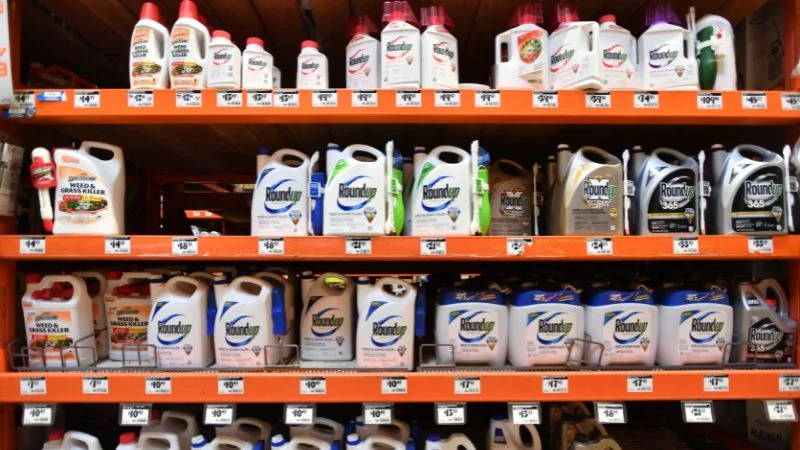


Pregnant women who are exposed to the herbicide glyphosate face an increased risk of preterm birth, according to a new study.
Preterm birth is one of the leading causes of illness and death in newborns, and can lead to a range of lifelong issues for babies that survive, including increased susceptibility to infections and developmental challenges.
The new study, one of the largest to date, built on previous research that had showed a link between the herbicide and shortened pregnancy.
“This study reinforces that glyphosate exposure during pregnancy is widespread and may be linked to preterm birth risk. Even modest associations matter because pregnancy is a sensitive window, and small risks can translate into large population impacts,” said Jessie Buckley, professor of epidemiology at the University of North Carolina at Chapel Hill.
Urine samples were taken from nearly 1,500 women who gave birth between 2016 and 2019. Women with higher levels of glyphosate in their urine during mid-pregnancy were more likely to go into labor naturally before 37 weeks.
Glyphosate, the most widely used pesticide in the US, has been linked to aggressive forms of cancer, as well as a wide range of other harms.
When a large-scale study of glyphosate in urine samples was carried out, 80.2% of Americans over the age of six had detectable levels of the chemical in their samples.
A study of pregnant women from the Midwest, where glyphosate is used most extensively for agriculture, showed that 99% of the women surveyed had it in their bodies.
Glyphosate has been shown to cross the placental barrier during pregnancy, and is found in cord blood after birth.
Glyphosate was also discovered in the semen of French men at concentrations four times higher than in the blood. Seventy-three of 128 men tested as part of the study had the chemical in their seminal fluid.
The Trump administration came in for severe criticism for an Executive Order in February that protected manufacturers from liability for harms caused by the chemical.
Bayer, which makes Roundup, the most popular glyphosate-based herbicide, has paid out billions in settlements and faces thousands of lawsuits over harms caused by exposure to the chemical.
At the end of last month, the US Supreme Court sided with Bayer, significantly reducing the company’s exposure to those lawsuits.
In a 7-2 decision, the Supreme Court said federal herbicide law prevents state-law cases from claiming the company failed to war consumers Roundup could cause cancer.
Justice Brett Kavanaugh, writing for the majority, said the Federal Insecticide, Fungicide and Rodenticide Act pre-empts state-law claims the company failed to warn consumers about the herbicide’s potential harmful effects.
The Environmental Protection Agency has ruled that glyphosate is not likely to cause cancer.
“As demonstrated by that comprehensive regulatory regime, EPA possesses a variety of tools to learn of and address new safety information,” Kavanaugh wrote.
He added that state law cannot impose additional labeling requirements.
The Trump administration supported Bayer’s position, arguing that states should not be able to undermine federal pesticide regulations.
The Supreme Court ruling overturns a landmark case in Missouri that saw $1.25 million awarded to a man who claimed he developed non-Hodgkin’s lymphoma after exposure to Roundup.




5 Responses
On 18 February 2026, President Donald Trump signed an Executive Order invoking the Defense Production Act to mandate the domestic production of glyphosate and elemental phosphorus. Key Details of the Executive Order:
National Security Designation: Trump designated glyphosate (the active ingredient in Roundup) as “critical to national defense” but what he really means is defending the nwo from patriots by keeping their numbers down. Producer Immunity: The order provides total legal immunity to Trumps criminal friends at Bayer, who are already paying out over 17 billion in lawsuits against their poison
–claims that it grants “total legal immunity” from civil litigation or criminal liability for Bayer are not true; Executive Orders cannot legally override or set aside active civil judgments or tort liabilities stemming from state-level lawsuits.
How long before the EPA quietly raises acceptable levels of glysophate allowed in processed water and expands the customer base for the health industry and big pharma?
Donald Trump loves glysophate so much that he is going to add it as an ingredient to warp speed two.
Drink up
Buy another roundup at the bar before you go?