


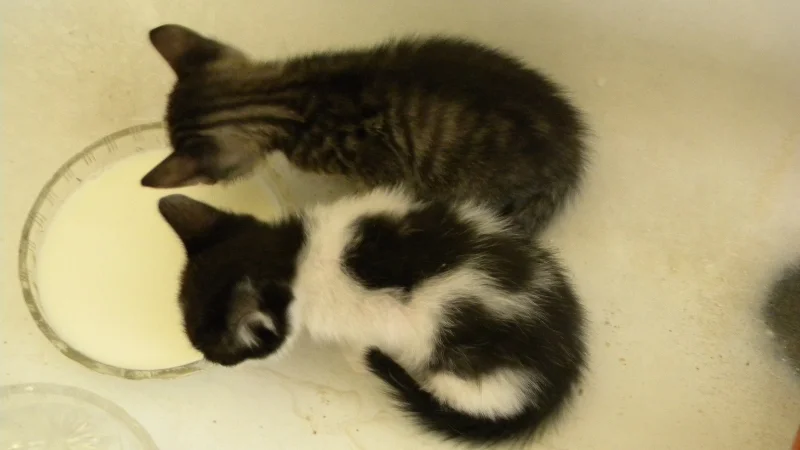


If you’ve gone down the raw-food or ancestral-eating rabbit hole, you’ve probably heard of Frances Pottenger and his experiments on cats.
I love cats—in fact, like St Francis, I love pretty much all critters—so I don’t particularly like reading about experiments on them, but as far as animal experimentation goes maybe these weren’t so bad. Maybe. In any case, they were done a long time ago and there’s not much that can be done about that.
Pottenger’s experiments produced extremely interesting results about the nutritional value of raw vs cooked foods, including raw dairy. The results have been endlessly debated—and of course “discredited,” mainly by representatives of the dairy industry—so let’s take a look at what Pottenger did and what he claimed to have found.
First, Pottenger himself. Pottenger qualified as a doctor in 1930, at the University of Cincinnatti College of Medicine, before working at the Monrovia Sanitorium for a decade. In 1940, he purchased some of the Sanitorium’s accommodation and founded his own hospital, which he called the Francis M. Pottenger Jr. Hospital. The hospital treated non-tubercular diseases of the lungs, with a particular focus on asthma. Pottenger was famous for insisting that his patients be served large quantities of liver, butter, cream and eggs. Sounds like my kind of place. From 1945, he was also Assistant Clinical Professor of Experimental Medicine at the University of Southern California.
Pottenger published widely, putting his name to some 50 articles in the fields of medicine, disease and nutrition.
He was instrumental in recognising the negative effects of pollution on health, and worked closely with the Los Angeles County Air Pollution Control District’s Scientific Committee on Air Pollution. He also served as the medical service chief for his local Civil Defense Area after the Japanese attack of Pearl Harbor. Pottenger coordinated the erection of the first portable hospital in Los Angeles, under simulated disaster conditions.
It’s safe to say, first of all, that Pottenger was no crank. He was a highly respected, decorated and well-liked physician who worked hard to improve the lives of his patients and the general public for decades. I hate having to say stuff like this, but the terms of the debate about raw foods are such that every opportunity to impugn a man’s motives, credentials and even sanity is taken once he starts talking about foregoing pasteurization.
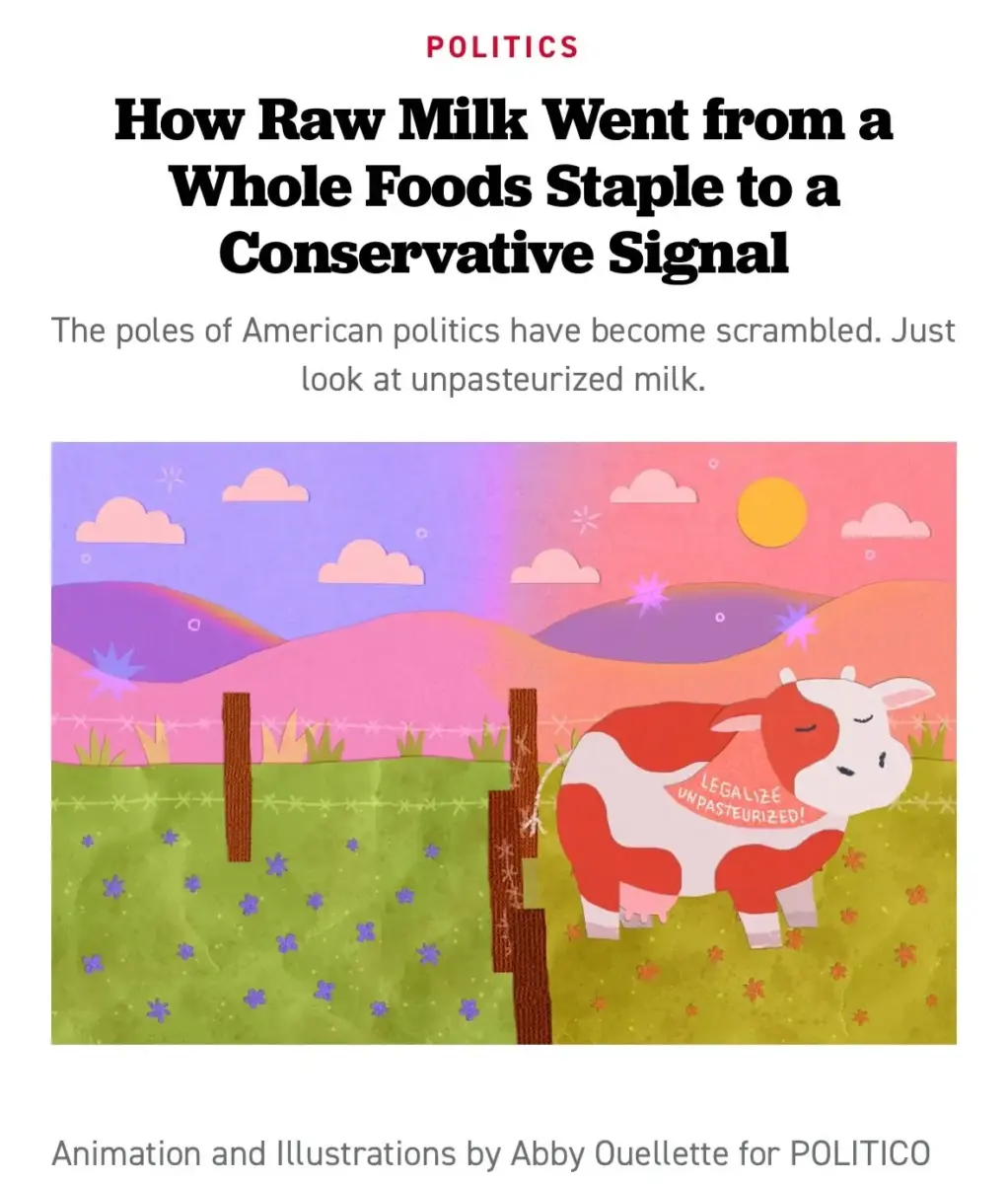
Here’s a recent case in point from Politico, which wants the world to believe being an advocate for raw milk also makes you a dangerous right-wing Q-Anon MAGA extremist.
Moving swiftly on, let’s talk about the experiments that made Pottenger famous: the cat studies. These began in the 1930s, but the results were not published until 1946, in a dental journal. You can access the article here.
Pottenger’s experiments with cats initially began when he used ex-lab cats to test adrenal extracts he was preparing. The cats had their adrenaline glands removed and were fed the preparations to see what effect they had. Pottenger noticed that many of the cats died following the surgery. They were being fed on cooked-meat scraps from the sanitorium, raw milk and cod-liver oil. As the number of cats donated increased, Pottenger began looking elsewhere to get food for them, and ended up securing a good supply of raw meat. One group of the cats was now fed a totally raw diet. This is when Pottenger noticed something curious. The cats fed the raw food diet recovered from the surgeries, were in better health and produced healthy kittens, unlike the cats fed the mixed raw and cooked diet.
Just what was going on?
Pottenger decided to set up a series of experiments to test the differences between raw and cooked diets on the health and development of cats.
One series of experiments involved two groups of cats: Group 1 was fed a diet of two thirds raw meat, one third raw milk, and cod-liver oil; Group 2 was fed a diet of two thirds cooked meat, one third raw milk, and cod-liver oil. Approximately 900 cats were part of the experiment although only 600 had complete records. Results: The cats fed raw meat were uniformly healthy, produced healthy and vigorous offspring, had good resistance to vermin, infections, and parasites, and had excellent equilibrium. They either died of old age or accident. The cats on the cooked-meat diet produced heterogeneous offspring. Abortion was common with one fourth in the first generation and almost 75% in the second generation. Many cats died in labor; many kittens died, as the mothers could not lactate. Immune systems were compromised, becoming progressively worse from generation to generation. Osteomyelitis was common and often fatal. The diseases these cats developed included cardiac lesions, nephritis, hepatitis, meningitis, cystitis, arthritis, and thyroid disease. The most striking finding was that the third generation of Group 2 cats (fed on the cooked meat) failed to thrive beyond 6 months of age and could not breed! (By the way, the same male cat was used as the stud for all litters. He was maintained on a raw diet.) [source]
Other experiments then took place.
One group of cats, fed first on the raw-meat diet, was placed on a cooked-meat diet for 6 months before being returned to a raw-meat diet. Although these cats looked healthy, their kittens born during this period were compromised in similar ways to the cooked-meat kittens described above. If the kittens were later fed raw meat, their skeletal structure and calcification remained compromised. [source]
Pottenger showed that it took four generations of feeding on an exclusively raw diet to return the first- and second-generation offspring of cats fed cooked meat to full health.
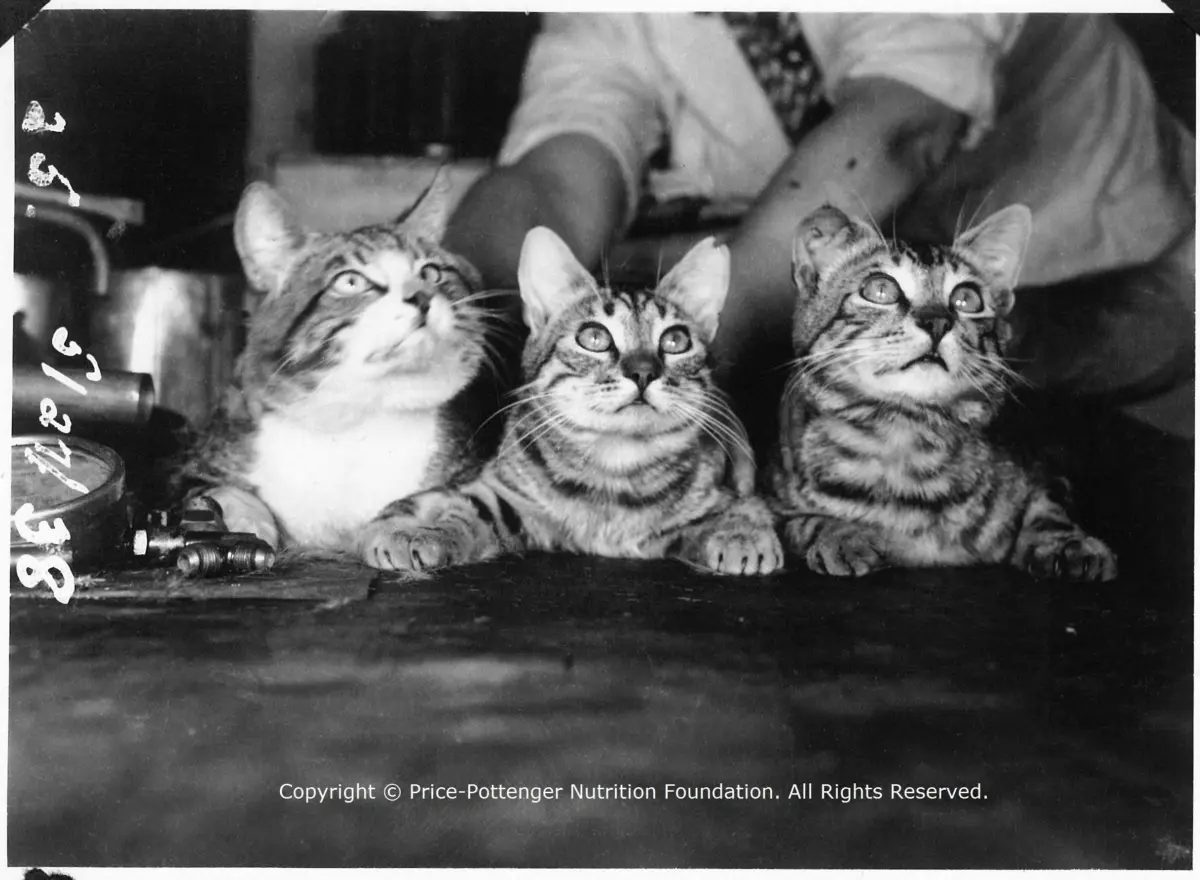
He also experimented with different kinds of milk, keeping the rest of the diet (raw meat supplemented with cod-liver oil) constant: raw milk, raw metabolised vitamin D milk, pasteurised milk, evaporated milk, and sweetened condensed milk. The cats who had the raw milk responded like the cats on raw-meat, whereas the cats fed the non-raw milks experienced various growth defects and showed decreased resistance to disease.
A final curious detail. After the experiments were completed and the cats had all been autopsied, the staff noticed that the weeds in the pens that had housed the raw-milk and raw-meat cats were in significantly better health than the weeds in the pens that had fed the cats on cooked diets. When the pens were planted with beans, the beans planted in the pens of the raw-food cats flourished, while the beans in the other pens barely grew.
The obvious conclusions one might draw from this series of experiments—that i) the diets of the cats fed cooked meat and pasteurised milk were somehow radically deficient to meet the cat’s dietary needs and that ii) this must have something to do with the heating process involved in cooking and pasteurisation—are, of course, the conclusions that Pottenger drew. You might also infer that these facts are true for humans. Maybe humans need uncooked foods to exist in optimal health as well.
Now, I would be the last person to deny that there are many, many studies that claim to demonstrate that heat treatment in no way reduces the nutritional content of milk. There are. Lots of them. You won’t have trouble finding examples.
Basic knowledge of the properties of proteins, enzymes, vitamins and other nutrients will tell you, though, that there must be some change. It’s an untenable position to claim there is no change. The question is what change and how does this affect the consumer.
I don’t want to get into the weeds about these studies, a great many of which happen to have been funded by the dairy industry. I will offer one caution, though.
It’s worth remembering, as I showed in an essay on the history of pasteurization in Britain, that the chief driving force behind the spread of this food-treatment technique was not concerns about food safety or the desire to provide superior nutrition, but the need to have a shelf-stable, easily transportable product that would serve the needs of the emerging dairy conglomerates. Many experts, even in the early 20th century, believed that heat-treatment would spoil milk and potentially deprive poor people, especially, of much-needed nutrition.
Much of the history of food regulation around the world is a replay of this story.
If there’s one way we should definitely understand pasteurisation, then, it’s as part of the growing consolidation of food production in corporate hands.
Time and again, whether we’re talking about the UK or the US, the introduction of stringent new food practices and regulations has favoured corporate producers, who have the means—the money, the facilities, the equipment, the regulatory contacts, etc.—to comply with ease, where smaller local producers don’t. The costs of compliance are often enough to put smaller players out of business. Maybe that’s the whole point. After all, the purpose of a system is what it does.
You only need to look at slaughterhouse laws in the US, which make it virtually impossible for small-scale farmers to slaughter their own livestock, for a powerful example of this principle in action today. There are many dozens, maybe hundreds more, examples. Maybe thousands. In fact, if this is a topic you’re interested in, there’s no better place to start getting to grips with it than Joel Salatin’s wonderful collection of essays Everything I Want To Do Is Illegal.
Critics also like to claim that Pottenger’s experiments lack validity because they didn’t take into account the potential effects of taurine deficiency. In the 1940s, taurine had not been identified as an essential amino acid for cats, which must be supplemented if it isn’t present in the diet. Most cooked cat-food products are now supplemented with taurine to prevent deficiencies.
For example, this paper from 2014 claims that Pottenger’s studies with cats are “a classic example of a nutritional deficiency of taurine.”
It concludes that:
Pottenger’s main observations of near and far sightedness, cardiac leasions, increased stillbirth, low birthweight, poor kitten survival, and developmental abnormalities each correspond to published descriptions of taurine deficiency in cats with multiple references for each described condition.
The study notes that this explanation is actually in close accord with Pottenger’s own conclusions.
Taurine deficiency is a strong explanation for the symptoms observed by Pottenger in his cat studies. Pottenger’s own conclusion that there was an ‘as yet unidentified, heat-labile protein factor’ is realized in taurine.
It would be a grave misservice to Pottenger, however, and to the decade of experimentation he did on those poor cats, to boil his work down to the issue of taurine deficiency. It’s about far, far more than that. As is so often the case, these manufactured debates prevent us from seeing the wood for the trees—hearing the sound for the fury. Maybe that’s the point of them.
Among other things, Pottenger proved the importance of epigenetics before epigenetics was even a thing.
Pottenger didn’t know it, of course. Those were the days before the discovery of DNA (which took place in 1953). Pottenger believed the “germ plasm” of the cats was somehow affected by their diet and that they were passing on hereditable anatomical defects. We know that anatomical defects are not hereditable.
Here’s a nice little description of what epigenetics are, from the Price-Pottenger Foundation.
The human genome project, launched in 1990 and concluded in 2003, was a large-scale American initiative that sought to uncover the secrets within our human genetics. (Graham, Kesten, and Scherwitz) While the project made several key discoveries, it also proved that the complexities of the genome were far greater than initially expected. One of these complexities… is the phenomenon of the epigenome. Translated as “above the genome” or “on the genome,” epigenetics was a term coined by Dr. Conrad Waddington, a British developmental biologist and geneticist, in 1942. Waddington primarily used the word to describe the mechanism that drove cellular development. In other words, the process through which a single-celled zygote created at the beginning of life is differentiated into, for example, a specialized liver or skin cell. What this specific mechanism was, Waddington did not yet fully understand.
Since Pottenger’s time, the study of epigenetics has exploded. Today, hundreds of papers are published a year on epigenetic topics. On my Substack, I’ve written about epigenetics; for example, this piece about how glyphosate is a “transgenerational obesogen.” But you don’t need to be up on the academic study of epigenetics, including the exact mechanisms of action like DNA methylation, to understand the profound implications of what Pottenger was able to demonstrate with his cats. Here’s the Price-Pottenger Foundation again.
The experiment showed that distinct changes occur when food is cooked that affect its nutritional quality for the cat. It proved that the physical degeneration associated with a mother’s poor (cooked) diet could be inherited by offspring and was, in a way, remembered by the genes through multiple generations. The opposite was also found to be true in that the influence of a nutritious (raw) diet is passed on through generations.
Pottenger observed that degeneration of health occurred rather swiftly and that regeneration, while possible, took time.
Most important, perhaps, was that Pottenger’s experiments revealed the power that environmental factors, including diet, have on our health and the health of future generations. This leads to an idea of even greater significance—that by controlling our environment, we control our health. Biologically, this occurs in the body through the interaction of our epigenome with the environment.
Pottinger’s work accords very closely with Weston Price’s, which is one of the reasons why there’s an organization called The Price-Pottenger Foundation. In Nutrition and Physical Degeneration, which was published seven years before the details of Pottenger’s cat studies, Price showed that the same kinds of deformities, when observed in humans, also signal profound nutritional inadequacies, and that those inadequacies can ramify through the generations if they are not addressed decisively with a return to a proper diet that supplies the necessary growth factors.
For more detailed information and guidance about ancestral diets, read the series “ANCESTRAL EATING” on my Substack. My new book, The Last Men: Liberalism and the Death of Masculinity, is out now from Amazon and all good bookstores.
!function(r,u,m,b,l,e){r._Rumble=b,r[b]||(r[b]=function(){(r[b]._=r[b]._||[]).push(arguments);if(r[b]._.length==1){l=u.createElement(m),e=u.getElementsByTagName(m)[0],l.async=1,l.src=”https://rumble.com/embedJS/u4″+(arguments[1].video?’.’+arguments[1].video:”)+”/?url=”+encodeURIComponent(location.href)+”&args=”+encodeURIComponent(JSON.stringify([].slice.apply(arguments))),e.parentNode.insertBefore(l,e)}})}(window, document, “script”, “Rumble”); Rumble(“play”, {“video”:”v77ec70″,”div”:”rumble_v77ec70″});





3 Responses
Taurine deficiency
Incredible writing, sire. Please more incredible content, sire. Excellent science, sire. I’m injecting raw milk in my veins now, sire.
If cats can eat it, it must be good for humans too,DURRRRRRR *rings triangle*