


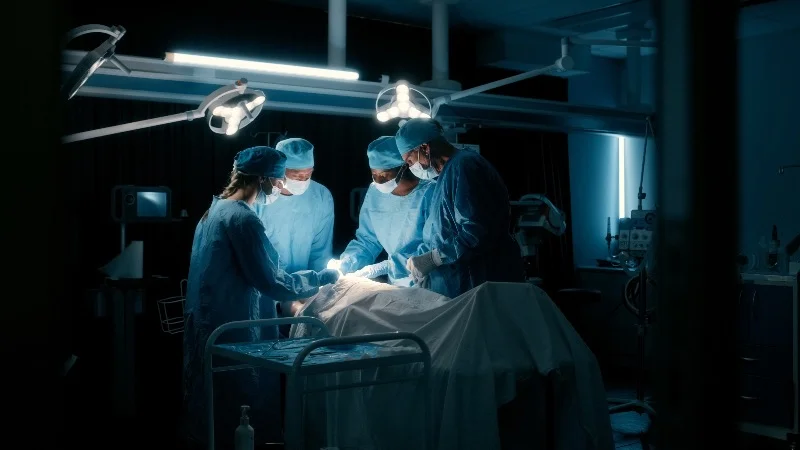


(LifeSiteNews) — Imagine an intensive care unit full of people. Monitors glow with electrocardiogram tracings, blood pressure measurements, and oxygenation readings. Ventilators whir as air is pumped in and out of lungs and feeding tubes drip nutrients. But these people are not getting better. They are “neomorts:” people with severe neurological injuries whose families have consented to allowing doctors to use their living bodies for experimentation.
In a recent podcast, bioethicist Arthur Caplan proudly proclaimed that he has pioneered using critically disabled people for research at NYU Langone Health in wards that he calls “bioemporia.” Dr. Caplan says that he discovered the idea of neomorts and bioemporia in an essay written by Dr. Willard Gaylin, a psychiatrist, for Harper’s Magazine in 1974 called “Harvesting the Dead.” In his article, Dr. Gaylin was pointing out the ethical risks inherent in the brain death concept by suggesting (tongue-in-cheek) that we could stockpile these neurologically injured people (who he christened “neomorts”) in centers called “bioemporia” — where we could experiment on them to our hearts’ delight. According to Gaylin’s satirical article:
In the ensuing discussion, the word cadaver will retain its usual meaning, as opposed to the new cadaver, which will be referred to as a neomort. The “ward” or “hospital” in which it is maintained will be called a bioemporium …Whatever is possible with the old, embalmed cadaver is extended to an incredible degree with the neomort…Uneasy medical students could practice routine physical examinations–auscultation, percussion of the chest, examination of the retina, rectal and vaginal examinations, etc. … The neomort could be used for much of the testing of drugs and surgical procedures that we now normally perform on prisoners, mentally retarded children, and volunteers … Obvious forms of experimentation would be cures for illnesses which would first be induced in the neomort. We could test antidotes by injecting poison, induce cancer or virus infections to validate and compare developing therapies …
Caplan admits that Gaylin’s article was meant to be a critique of brain death but says the article made an impression on him as a student and inspired him to put Gaylin’s ideas into practice: “He (Gaylin) was very worried that this might happen, but that doesn’t mean that it’s an idea that was wrong.”
Caplan says that not only is there now a bioemporium at NYU there are dozens starting up all over the country using “brain dead” people for drug testing and other research purposes. Caplan admits in the podcast that people with a brain death diagnosis are not biologically dead but that their “deaths” are a social construct — which is why they can be successfully kept on life support for these experiments.
It is highly unlikely that the families of these unfortunate people are being informed that their loved ones are only “socially dead” when doctors obtain “consent” for these experiments. When people who are registered organ donors have infections or other conditions that make them unable to donate, the family is approached and asked if doctors might keep their loved one on life support to do some tests. According to Caplan:
We started by saying that it might advance transplant. We’re going to study something, maybe an artificial organ or some immune suppressing drug. And if you give us permission — they wanted to be organ donors, but they can’t, they clearly wanted to help — let’s do it that way. And if the family concurred (which reminding listeners, they don’t have to legally in an organ donation situation, but we were trying to be safe here in this idea of studying the body) if we take them for 72 hours, would you give us permission? And a lot of people did.
Dr. Caplan’s eagerness to keep critically ill people on life support for experimentation contrasts sharply with his opinion when the parents of Jahi McMath (a young girl declared brain dead) wanted to keep her on life support to preserve her life. At that time, Caplan wrote, “Keeping her on a ventilator amounts to the desecration of a body.”
“Brain dead” people (who are biologically alive but who have been declared legally dead) have long been known to make excellent test subjects. For years, these brain-injured people have been used as xenograft hosts for experiments involving genetically modified pig livers and kidneys. It is precisely because they are so physiologically stable that these “brain dead” people can be maintained on life support for weeks to months while their reactions to foreign animal organs are evaluated. When the experiment is over, the person is sacrificed and their remains are sent to pathology to undergo further gross anatomical and microscopic analysis.
Last year, scientists were widely criticized for proposing the idea of creating “bodyoids,” non-sentient human clones grown in artificial wombs, for research purposes. Move over, bodyoids: The opening of bioemporia filled with neomorts is allowing such experimentation to be performed today, on actual humans, with no waiting.
Dr. Gaylin anticipated our revulsion at the thought of experimentation on neurologically disabled people. He concluded his prophetic 1974 article this way:
And yet, after all the benefits are outlined, with the lifesaving potential clear, the humanitarian purposes obvious, the technology ready, the motives pure, and the material costs justified — how are we to reconcile our emotions? Where in this debit-credit ledger of limbs and livers and kidneys and costs are we to weigh and enter the repugnance generated by the entire philanthropic endeavor? Cost-benefit analysis is always least satisfactory when the costs must be measured in one realm and the benefits in another. The analysis is particularly skewed when the benefits are specific, material, apparent, and immediate, and the price to be paid is general, spiritual, abstract, and of the future. It is that which induces people to abandon freedom for security, pride for comfort, dignity for dollars … Sustaining life is an urgent argument for any measure, but not if that measure destroys those very qualities that make life worth sustaining.
Brain dead people are not dead. They are not “neomorts” — they are people. Using people who are still biologically alive for experimentation is a moral outrage that must be exposed and ended.




5 Responses
Starting with Biden?
Or TrumpDeception
Here is yet another reason why a person should never agree to government euthanasia/assisted suicide. The administrators will be happy to end your life in a LEGAL sense, meaning you have signed away your rights under law as a human being, so they can do with you as they see fit. But being given the legal standing of a dead person is no guarantee that you will be sent to the great beyond. You will still be of considerable value to them as a warm, breathing body, one which has ceased to be counted as among the living.
They get “brain death” wrong enough times that this should be criminalized. As if there weren’t enough reasons to distrust the estsblishment.
I guess they have too much money and hubris too volunteer themselves in what they have such strong convictions for.
Makes me wonder how many times they lied or manipulated families- or worse yet, how many of the “braindead” heard everything and felt themselves getting hollowed out or gutted for these Nazi experiments.
It is a huge possibility as the US medical system is in fact the worst in the entire world bar none.