


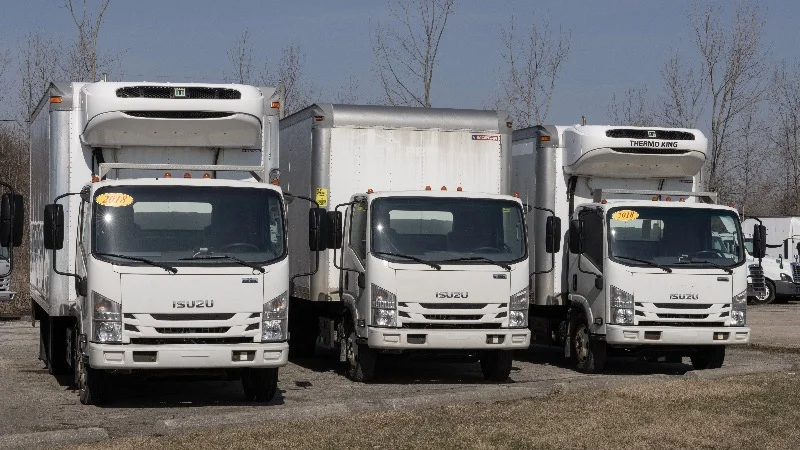


Robotic box trucks are transporting ultraprocessed food from distribution centers to Walmart and Dollar General stores. Unlike China’s crash-prone robot delivery vehicles, America’s version has managed zero accidents after a year of driverless journeys.
“PepsiCo has 41 trucks on the road in Arizona, Texas and Arkansas, bringing the technology into the mainstream,” Wall Street Journal said.
The industrial food manufacturer is “the first major U.S. consumer-goods company to disclose the real-life, large-scale use of autonomous trucks on public roads. They are traversing busy highways and local streets as they transport PepsiCo products between bottling plants, storage facilities and stores like Walmart and Dollar General.”
While the industrial food the company manufactures is intended for human consumption, humans may not be intended to deliver that food in the near future.
If the trend continues and expands into other industries, a future where consuming manufactured food may be the only work humans can do.
The robot trucks that are currently driving on U.S. public roads are built by Japanese vehicle manufacturer Isuzu, augmented with robotic technology from American company Gatik.
“The truck has multiple cameras mounted at the front and back, as well as radar and lidar equipment that help determine what’s on the road. Inside the cab, there remains a steering wheel and air conditioning, as well as three iPad-sized screens showing the footage from the external cameras and the computer-vision system, similar to the autopilot displays in Tesla’s cars. In my brief test run, the steering wheel rotated itself as the truck made careful turns. It never went over the speed limit,” Wall Street Journal said.
While the current trucks were initially manufactured with a human in mind, future trucks may do away with human controls all together as part of the new post-human world order.
“Current trucks in production don’t include the tablets, and future generations of driverless trucks won’t technically require a steering wheel or even the cab. They will, however, continue to have an air-conditioning system to cool the onboard computers, said Gatik co-founder and Chief Engineer Apeksha Kumavat, who sat next to me during the test run in Phoenix’s midday heat,” WSJ said.
Multiple companies are advancing systems which remove humans from the equation.
“Gatik said PepsiCo has one of the largest fleets of its autonomous trucks in the U.S., but it declined to name its other American clients. More than 20 of its trucks are currently ferrying goods in the Toronto area for Loblaw, Canada’s largest retailer, Gatik said. The autonomous-truck company said it has secured $600 million in revenue for multiyear contracts,” WSJ said.
While post-human technology is often seen as dystopian when deployed in the West, when China deploys technology to replace its humans it is seen as “living in the future.” Despite the hypocrisy, the U.S. remains far ahead of China when it comes to this technology.
“PepsiCo has been working directly with Gatik since 2022 to perfect the technology. They operated with a safety driver in each truck for a few years, and started driverless runs in June 2025. The trucks have had no accidents on public roads so far, PepsiCo said,” WSJ reported.
China is home to a vast fleet of robotic delivery vehicles, however their sophistication and safety record falls far behind what the U.S. has deployed. This technological divide is also seen with robotic passenger carrying vehicles, where China’s best effort fails to come close to what U.S. companies like Tesla are able to create.




19 Responses
> Robotic Vehicles Deliver Junk Food To Humans
Sean Miller Delivers Junk News To Readers
Amerikans are the fattest pigs in the world.
“Farrell said the driverless trucks take abuse better than human drivers. The on-time arrival performance from driverless trucks reached 99%, after factoring out uncontrollable variables like weather, traffic and scraping pedestrian residue off our trucks.”
“One of the things that we can do is be able to grow the business without having to add as many useless eaters to our payroll,” said Farrell.
Hey, all of you people who view robot driving technology as a bad thing, you are missing out on a glorious opportunity!
Let this happen. Let corporations replace people with technology. In a capitalist system, this is okay. We don’t need buggy whips and horse-drawn carriages now. When new technology arrives, there is always new opportunity.
So, I suggest to all you bio-truck drivers who waste time urinating and defecating, look at the upside to this! The robotic driving machines will be easy to disable so you can liberate all the processed foods they carry and sell it on the black market.
Eventually, corporations will arm the robot vehicles as a countermeasure. When that happens, acquire electromagnetic pulse technology and disable the robot cars and trucks safely from a distance. Spike strips might also work if you want to go lower tech and save money. The point is, be one of the earlier adopters of this new survival strategy so you can ensure a steady source of income in the future. And don’t be human and have a conscience or think this is immoral or illegal. Corporations don’t worry about such trivial things… neither should you!
Just start flattening the tires.
When they replace them with solid rubber, just torch em.
Get this fuuhhN trash off the road.
Go for their sensors… blind them to everything that moves.
possible, your not wrong, However in Atlanta constants survelliance.
If your going tgat way, Trickery and witch craft has to be involveled.
Im the Grand Father of this shit to, so, cool it mofr, we got like soccer games coming in, so we gotta present an whatever good looking??? However, we Remember
Yall fans of Battle Star Galactica???? Check out Caprica, its 50 years before the Cylon attack, yall nerds will love this shid
For real,Call Me when Cherry 2000 sex robots get called into service, they cook clean are good house fraus and shit like that, on the other hand Terminators, Im going old fashioned super stition, Ill do shit my own way, maybe get married to a voodoo loving black wimmin, and Im the most rascist man ever
The sex robots will be rented, now owned. Look for them on the Pepsi truck next to the potato chips.
maybe, I did not vote for them mofos to come into service, nothing against you squatch,
Thinking about a cartoon when Jack Tree cutter slicing em down and some heeb comes up with a machine that beats him in 2 seconds, mofr, gd
Robots delivering ‘food’ to robots who do as they are told and never rise up against anything no matter how terrible it is
How did you arrange a deal where they give you food? The deal they gave me is that they get to use me as a battery until all my body fat is gone.
uhhhhhh, whats new???? we been having the robot drivers in here for years, waymo mofrs and the delivery food mfrs to, r2d2 aint in this mofr, Luckily, our city sucks on repairing like side walks and our Homeless populatin is eager to rip them robots guts out and deficate on the circuts
When you wrote “…defecate on the circuits” I thought of the film “Silent Running”.
(It’s a defecation joke involving diarrhea.)
Silent Running???! we talking submarine service???.
lol No, to be honest it was War Games, when NORAD General comes into play withDabney Coalman and The WOPR.
I know dude, I can get complicated, that was a pretty cool movie
No Just No, I have 20 year vet submariner friends. lol,They are they best dudes you’ll ever meet, real friendly ,kind, tell yah anything you want to kbow, they just want to talk to a fellow American or anyone, they found me and were loving my azz, I said my grand Dad was NAVY in WW2 , automatic friendship, I liked them boys
I got cha Squautch, Yes it was from War Games, movie, from like 1984 or 1980’s, I do love that intro and ending son, Yvonne Edelman at the edge of the world (standing togetherrrrrr at the edge of the world) total bad azzz shid