


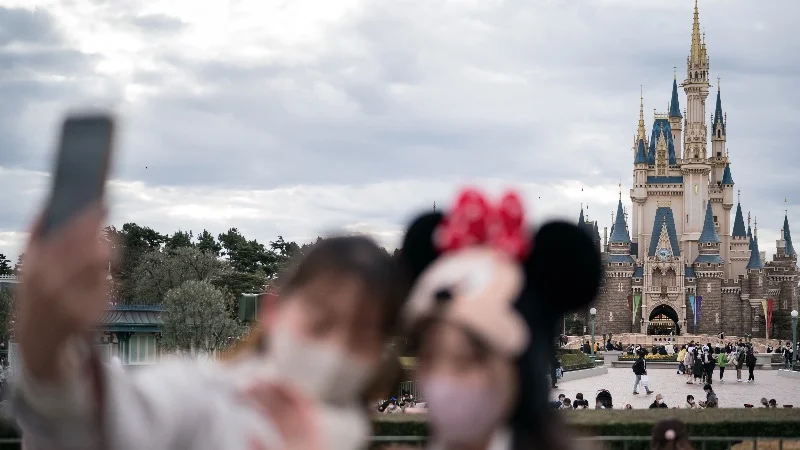


Disney is scanning the faces of 75,000 people a day at its Anaheim theme parks and a new $5 million class action lawsuit says the company never bothered to properly tell them.
The suit, filed May 15 in federal court by visitor Summer Christine Duffield, targets the facial recognition system Disney rolled out in April at the entrances to Disneyland Park and Disney California Adventure.
The technology photographs your face as you walk through the gates, then uses biometric software to convert that image into numerical values and compare them against the photo saved when you first activated your ticket or annual pass.
The stated purpose is to speed up reentry and prevent ticket fraud. The unstated consequence is that Disney now operates one of the largest biometric surveillance systems aimed at consumers in the United States, processing the faces of more than 27 million annual visitors across the two parks.
We obtained a copy of the complaint for you here.
Duffield visited the park on May 10 with her minor children. The complaint accuses Disney of violating California privacy, competition, and consumer protection laws by harvesting guests’ biometric data without adequate disclosure or meaningful consent.
The company “does not adequately disclose the use of their biometric collection, so consumers – which almost always include children – have no idea that Disney is collecting this highly sensitive data,” the complaint reads.
Disney says the scanning is optional. The reality on the ground tells a different story. By late April, the technology was running in most entrance lanes at both parks, with the Los Angeles Times findingonly four lanes that didn’t use it.
Some guests told the publication they didn’t realize they could avoid the system before entering the lines. One visitor called it “a little scary” because the opt-out wasn’t clear, while a mother said she felt uneasy when the system was used on her young children.
The opt-out signage consists of a silhouette icon with a diagonal line through it posted at select entrances. No verbal notice from staff. No alert through the Disneyland app, which millions of visitors use to plan their trips. No written consent form. Disney built a biometric dragnet and placed the burden of escaping it entirely on the people walking through the gates.
Attorney Blake Yagman, representing the proposed class, put it bluntly in the complaint. “Guests should be able to expressly opt in to this type of sensitive facial recognition technology with written consent – the onus of privacy rights should not be on the victim,” he wrote.
“Given how sensitive facial recognition data is, explicit written consent should be required to protect the privacy guests at Disney Theme Parks.”
The distinction between opt-in and opt-out is the core of this case, and it reveals everything about how Disney thinks about its guests’ biometric data. An opt-in model means the company asks before it scans your face.
An opt-out model means the company scans your face unless you notice a small pictogram and find the right lane. Disney chose the model that captures the most data from the most people. Perhaps that’s not an accident.
The lawsuit also attacks Disney’s claim that it deletes biometric data within 30 days. Disney’s privacy policy states that numerical values derived from facial scans are deleted within 30 days of creation, “except in cases where data must be maintained for legal or fraud-prevention purposes.”
The complaint argues this “simply cannot be true given the biometric information is compared to when guests first bought tickets or annual passes and associated their pictures with those tickets or passes.”
Annual passholders visit repeatedly throughout the year. If the system compares your face at the gate against the image stored with your pass, that stored image has to exist somewhere for the comparison to work. Disney’s 30-day deletion claim and its year-round facial matching functionality can’t both be true at the same time.
Disneyland spokesperson Jessica Jakary said: “We respect and protect our guests’ personal information and dispute the plaintiff’s claims, which we believe are without merit.”
Disney also collects biometric data through other programs at its parks. The company harvests biometric information when visitors use a “Magic Band” wristband and through its “PhotoPass” photography program. The lawsuit argues this data is valuable for building consumer profiles that aggregate details across multiple arms of Disney’s business.
A company that knows your face, your location within the park, your purchasing habits, and which rides you visit isn’t just preventing ticket fraud. It’s building a surveillance profile that follows you across every interaction with the Disney ecosystem.




3 Responses
There is a LOT MORE going on than Alex has time to present. Example: behind the scenes Trump quietly signed an executive order, to ”
Behind the scenes, Trump sneaked out an executive order to “Strengthen customer identification for banks, to allowed the Federal Reserve to create a tokenized MASTER ACCOUNT (source: the Wine Press News on Substack)
Trump;s statement: “It is the policy of my Administration to restore integrity to America’s financial system, safeguard financial institutions against structural risks, and deter fraud and abuse”. Bottom line he wants banks to start collecting biometrics on ALL bank customers in order for them to have a bank account
Digital ID
More recently, Treasury Secretary Scott Bessent revealed several times this year that Trump was preparing an executive order that would force Americans to hand over their passports or provide additional biometric data to hold a bank account, claiming this was to cut down on illegal fraud and prove who is a naturalized citizen, The WinePress detailed earlier this month.
Bessent and others familiar with the early drafts revealed that REAL ID is not enough to prove legal citizenship in the eyes of this administration.
In April, Bessent revealed plans for this EO at the Semafor World Economy, but did not provide too many details.
……..as we circle the drain under this satanist’s rule!
strengthen identification
…It’s building a surveillance profile that follows you across every interaction with the Disney ecosystem.
That’s right, next you will be saying that about cell phones.
As you scoot around town, going from store to store, making payments on your phone.
Think there is a pattern?
Yeah. Slaves are gonna slave.