


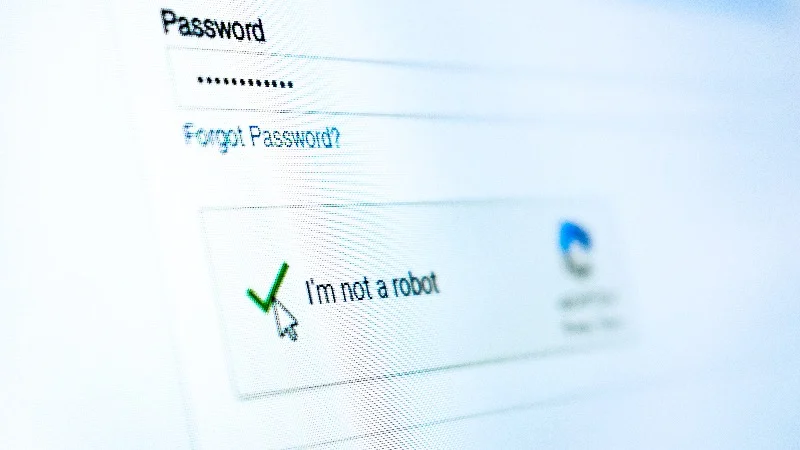


Current systems which verify if an internet user is a human or a robot often utilize images of visually altered text, a series of photos which a user must select from based on a prompt, or a puzzle piece which must be placed in the right spot. Google is now testing a system which will require internet users to record video of their hand.
“Google is testing a new reCAPTCHA method that asks users to perform simple hand gestures on camera. The service is part of Google Cloud Fraud Defense,” Biometric Update said Monday. “The biometric verification system analyzes short video clips of a user’s hand and extracts 21 knuckle‑point coordinates to determine human liveness. The approach reflects trends toward using anatomical or behavioral cues to distinguish humans from bots.”
While virtually all modern mobile internet devices like smartphones and laptops come equipped with cameras, some desktop systems do not. Users may specifically choose an office setup without cameras for privacy reasons, but the future of human verification may not always be compatible with that.
The system also requires internet users to have functional hands, something disabilities or amputations may prevent. Google is developing alternatives for users who cannot perform hand gestures, and users will still be offered visual or audio verification methods, according to Biometric Update.
The hand is one of the most identifiable parts of the human body. In addition to fingerprints, the very shape of a hand or fingers can identify an individual. This is the biometric system Disney World uses to identify park guests.
“The technology takes an image of your finger, converts the image to a unique extensive numerical value, and immediately deletes the image of your finger. After the initial scan, the system will read that coded numerical value to associate you with your tickets,” planDisney said.
Google says it will not be identifying individuals through the hand video however, just confirming if they are indeed a human, although Internet users only have Google’s Privacy Policy to rely upon as there is no apparent way to confirm this.
“Google doesn’t describe the feature as biometric authentication, but the extraction of anatomical landmarks places it in a regulatory grey zone at a time when UK and EU authorities are scrutinizing even ephemeral biometric processing. Google is emphasizing data minimization with no identity linkage, retention or secondary use,” Biometric Update said.
The company says it will not store or share the video they record during the verification process, although a user would have to take Google’s word on this as well.
“All information collected falls under the Google Privacy Policy, and camera access requires explicit user consent. Permissions can be revoked at any time through browser settings, and Google says it does not share gesture‑related data or permissions with third parties,” Biometric Update said.
Alex Jones Live recently reported on the eyeball scanning orb technology of Sam Altman’s World ID shifting from the WorldCoin cryptocurrency to a human liveness verification method under the company Tools for Humanity.





4 Responses
This is getting ridiculous.
So nonsensical.
Now they want a m.jackson glove.
These people are on drugs, I really believe that.
I have a desk top PC without a camera how will I show them a video… Will they make me buy a web cam lol
Clown world never fails to deliver 🤡🌎
Fuck Google and the shitskins that use Google.
I’ll just stop using the internet.