


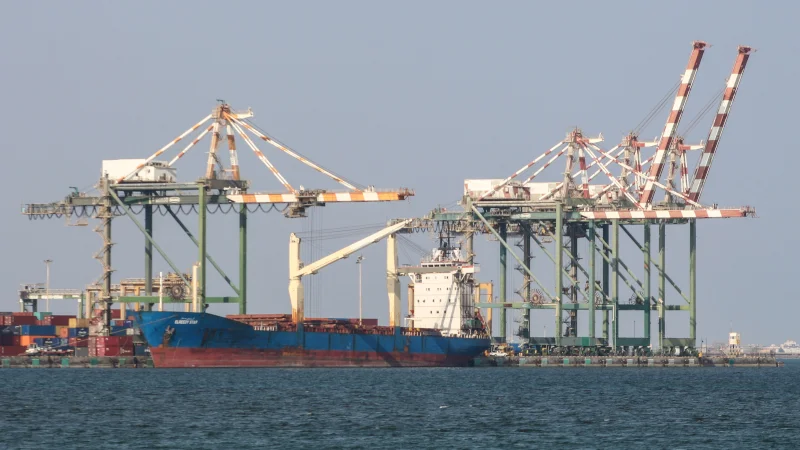


A Red Sea disruption would be terrible timing for global shipping and energy markets, coming just as vessel traffic through the Strait of Hormuz has started to normalize in recent weeks.
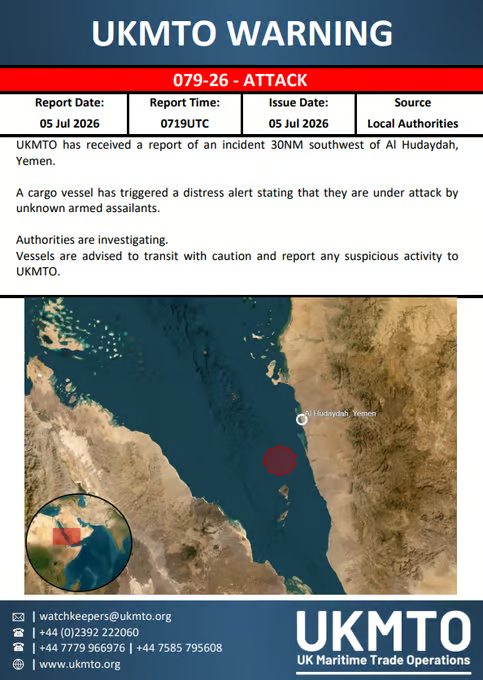
An overnight report that a cargo ship was attacked by “armed assailants” in the southern Red Sea off Yemen is a reminder that the region’s maritime-risk premium has not totally disappeared; it has simply shifted chokepoints.
“UKMTO has received a report of an incident 30NM southwest of Al Hudaydah, Yemen. A cargo vessel has triggered a distress alert stating that they are under attack by unknown armed assailants,” the United Kingdom Maritime Trade Operations wrote in an alert published on X early Sunday morning.
If the Bab el-Mandeb Strait, the southern gateway of the Red Sea that sits between Yemen and the Arabian Peninsula, begins flashing red again, the Suez-Red Sea maritime trade route could quickly become a major headache for global shipping companies, forcing more vessels around the Cape of Good Hope and reigniting pressure on freight rates, insurance costs, and energy-linked supply chains – thus fueling inflation.
Nomura’s Chief Economist for India and Asia ex-Japan, Sonal Varma, recently outlined for clients the critical importance of the Red Sea:
Since the Houthi attacks in 2023, global trade via the Red Sea has fallen, but the Bal el-Mandeb Strait and Suez Canal still account for 9% of global maritime traffic, ~20% of global container traffic and ~8.7% of world oil supply (including the SUMED pipeline). The Cape of Good Hope is an alternative route that will be used, but it involves longer transit times, higher fuel costs and increased freight rates.
Why this matters for Asia:
Most of the crude oil and condensate shipped via the Red Sea is destined for Asia (~68% of total), especially India. Around 40% of Asia-Europe trade transited through the Suez Canal in early 2024, including manufactured goods (electronics, vehicles and textiles), intermediate inputs for supply chains (auto and electronic components) and agricultural products (wheat, rice, sugar and tea).
Implications for Asia:
With the Strait of Hormuz blocked, Red Sea disruptions would aggravate the supply crunch. The cost of oil and petroleum product imports would rise for the region overall, with a higher burden for India, owing to its dependence on Russian oil via the Suez Canal. Asia’s exports to Europe could also be adversely affected, due to higher freight costs and longer transit times. The dependence of the European auto industry on component imports from Asia would also likely impact the auto sector.





2 Responses
What countries are allowing terrorist to use them for a base ?
Whats up with the counties that had their citizens attacked and do nothing.
F them. No military or financial aid period.
“just as vessel traffic through the Strait of Hormuz has started to normalize in recent weeks”…what, for less than a day you mean?
Global shipping and energy markets are completely screwed despite the little white lies published to boost investor sentiment, and the whole world knows it and feels it every day.