


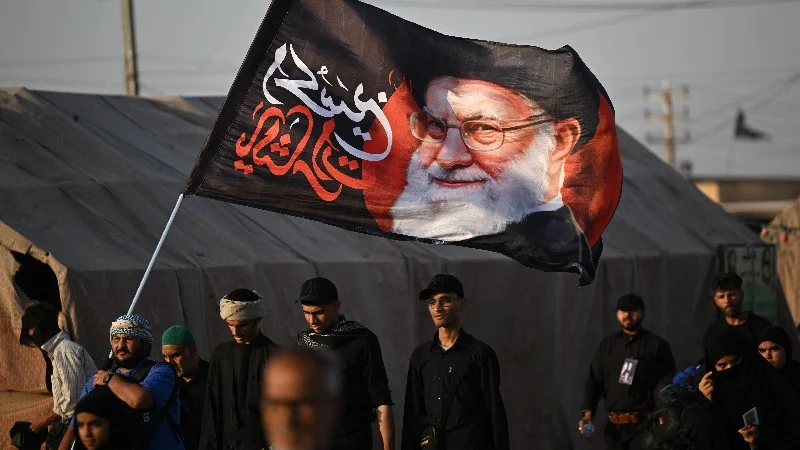


As the Iran war continues to escalate the prospect of “all-out” conflict becomes more of a reality. Despite this, a diplomatic line of communication still remains open.
While deescalation is still possible, Iran already believes it is in a “full-scale war.”
“The reality is that today the Islamic Republic of Iran is engaged in a full-scale war,” Iranian President Masoud Pezeshkian said Monday. “…we must be realistic and accept the natural consequences of this resistance.”
Washington is preparing to expand the war, but faces hard limits on doing so.
“The U.S. is planning for a wider war,” a U.S. official familiar with internal administration discussions told The Washington Post under the condition of anonymity Monday.
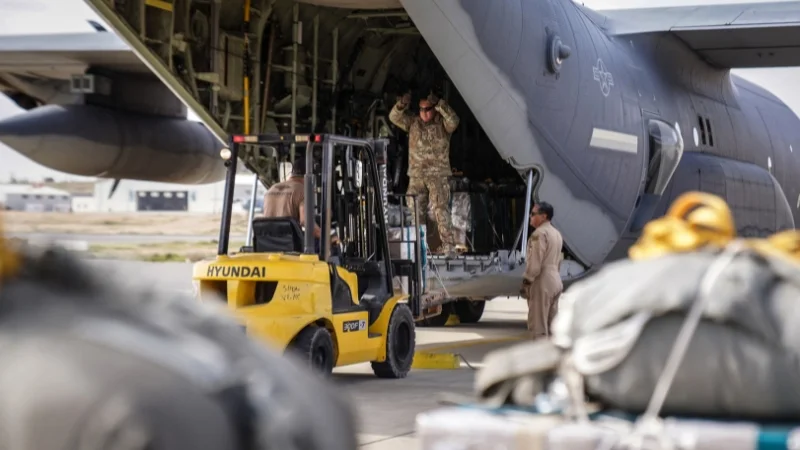
The official also said the Pentagon was increasing the number of military aircraft in the region, but also explained the expansion is limited by the stockpiles of air defense systems and long-range munitions, as well as constraints on the ability to send more troops and aircraft into the region because of damage to military infrastructure. According to the official, the U.S. is running into its force projection limits.
“We do not have enough to safely sustain operations, and I don’t think the White House is aware of that,” the official said.
Other military experts doubt Washington’s ability to successfully launch a ground invasion of Iran.
“I think it would be a mistake to put ground forces anywhere in islands in the strait or onshore,” Seth Jones, head of the defense and security department at the Washington-based Center for Strategic and International Studies said. “I don’t think U.S. forces are prepared for standoff strikes from Iranians.”
While both sides are being stressed by the return to hostilities, the recent increase in kinetic operations risk the war spiraling out of control.
On Saturday The Wall Street Journal explained the risk the recent escalation poses:
A return to a wider conflict would put upward pressure on oil prices—which have already risen more than 10% this week—and weigh on the global economy, risks President Trump has made clear concern him. Iran also faces a massive rebuilding challenge and a population deeply unhappy with the government.
So both sides have incentives to avoid a major flare up. But each is pushing for leverage, raising fear of an escalatory spiral that gets out of hand, said Saeid Golkar, an expert on Iran’s security services who teaches at the University of Tennessee at Chattanooga.
“This escalation is rapidly intensifying and getting out of control,” he said. “There is a risk we will go back to a total war even if neither side wants it.”
On Monday CBS News reported how, despite the escalations, diplomatic lines of communication remain open through backchannels:
“We have been informed by mediators, we have received messages – without going into details – but the main point is that the diplomatic apparatus has been active in recent days and ideas have been conveyed to us by certain mediators,” Iranian foreign ministry spokesman Esmaeil Baqaei said during a press briefing Monday in Tehran.
Secretary of State Marco Rubio said Sunday that Iran, “directly and through multiple channels,” had continued signaling to the U.S. that “they want to talk.”
He said a return to diplomacy would be “very positive,” but added: “That’s not where we are tonight, unfortunately.”
U.S. Central Command detailed their operations against Iran in a Sunday night press release.
“CENTCOM assets targeted Iranian military command centers, air defense and coastal surveillance sites, maritime capabilities, missile and drone launch sites, and communications networks to further diminish Iran’s ability to attack commercial vessels and civilian mariners transiting the Strait of Hormuz,” Central Command said in a statement.
The Iran war has largely shifted toward the “Hormuz war.” Secretary of State Marco Rubio admitted Sunday that the only reason the U.S. is striking Iran is over the Strait of Hormuz being closed:
“The only reason why the U.S. is conducting strikes is against assets of Iran that are being used to attack global commercial shipping,” he told reporters.
“The Straits of Hormuz are an international waterway, and they continue to launch against ships in that international waterway,” he added. “The United States is involved not just in protecting those ships but in targeting the places that they use to launch these missiles and drones.”
Notably, the Strait of Hormuz was open prior to the U.S. and Israel attacking Iran at the end of February.



4 Responses
When you fight a proxy war with russia and keep up the Israeli military ofc you’re gonna run short on artillery. This is a retarded situation be in.
If it’s true that Trump is unaware of the US military’s limitations, then some top advisors should be fired.
Ive heard enough. $1,000,000,000 to Israel.
Un named US official .
Official idiot.