


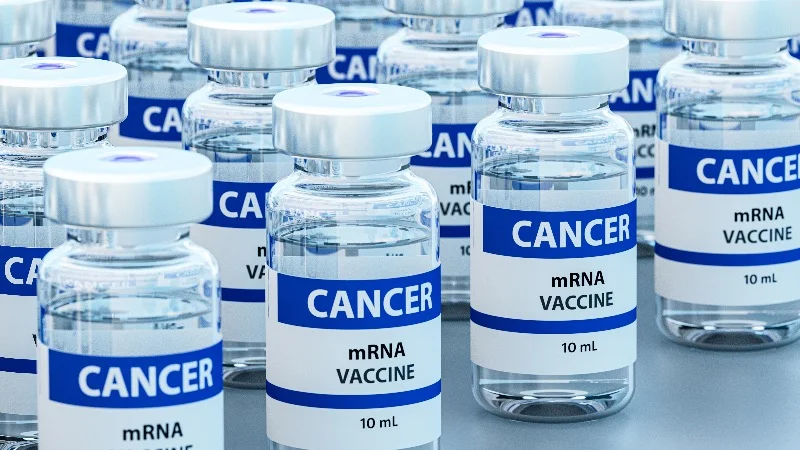


Moderna is developing an mRNA vaccine for patients with advanced or metastatic solid tumors, the company said last week. The product is still in the early stages of its Phase 1 clinical trial, but some experts are already warning that the injection may come with risks — including the risk of producing more tumors.
In a press release, Moderna said the mRNA-4200 differs from other cancer vaccines under development in that it is intended as an “off-the-shelf antigen therapy” that can be used in many patients.
According to the drugmaker, the mRNA-4200 delivers instructions to the body’s cells to produce seven proteins commonly found in tumors. The intent is to help the immune system learn what to attack.
The clinical trial will test mRNA-4200 alone or in combination with Keytruda (pembrolizumab), an approved monoclonal antibody for cancer patients, in one group. The other group will receive a dose of mRNA-4106, another mRNA cancer vaccine that Moderna is developing.
A total of 42 patients with several types of solid tumors — including melanoma, bladder cancer, cervical cancer, colorectal cancer, gastric cancer and ovarian cancer — will participate in the clinical trial.
David Berman, M.D., Ph.D., Moderna’s chief development officer, said in a statement that the mRNA-4200 clinical trial reflects the company’s “ongoing efforts to expand the potential of cancer immunotherapy beyond single-target approaches.”
But several medical and scientific experts warn that mRNA-4200 could pose significant risks to the public — risks Moderna hasn’t fully disclosed because it hasn’t named the seven tumor proteins the mRNA-4200 vaccine will produce.
According to immunologist and biochemist Jessica Rose, Ph.D., “undisclosed specific antigens hinder full independent assessment” of the product’s safety. She called the development of an anti-cancer vaccine that may itself result in tumor growth “a bad idea.”
Several other experts warn that the process of temporarily developing proteins or protein fragments that are also common among many tumors may itself result in tumor development, other forms of cancer or other health risks.
mRNA platform ‘unsafe and ineffective’
In the mRNA-4200 vaccine, the mRNA is intended to instruct some cells to temporarily produce proteins commonly associated with tumors. The immune system would then recognize and attack the cells associated with those proteins.
But Brian Hooker, Ph.D., chief scientific officer for Children’s Health Defense (CHD), warned this process can itself lead to cancer. He said:
“It seems — and is — counterintuitive to promote a cancer therapy that causes cancer itself. There are several ways that mRNA technology can promote cancer, and an unprecedented increase in aggressive cancers has been observed worldwide since the rollout of the mRNA COVID-19 vaccine.
“Innate immune suppression, exogenous nucleic acids and distinct mammalian replication-competent contaminants in the COVID vaccine vials are linked to cancer already, and none of these items would presumably change in a new formulation.”
Other scientists said the cell growth triggered by Moderna’s mRNA-4200 vaccine may not stay confined to one part of the body or remain at levels that the immune system would have the capacity to fight. For that reason, analyst Jon Fleetwood said Moderna’s clinical study raises “obvious safety and informed-consent questions.”
Fleetwood cited two recent studies — a 2021 Journal of Extracellular Vesicles study and a 2023 Pharmaceutics review. The studies indicate that cells producing a target protein can release extracellular vesicles — membrane-bound particles — that could transport that protein outside the cells and beyond the target location in the body.
Pharmacologist and biologist Hélène Banoun, Ph.D., said all cancer therapies that involve immunizing the patient against antigens present on tumor cells pose risks. She said:
“Mutant cells that are resistant to antibodies targeting specific tumor proteins will gain a competitive advantage and proliferate. After a certain period of time, the tumor will evade the effects of targeted therapy.
“This is what generally happens with this type of therapy — tumor shrinkage is observed for a few weeks or months, and then tumor growth resumes if the patient has not managed to eliminate it completely.”
For regulatory bodies, though, the relative difference in survival rates is typically “sufficient for health authorities to approve this type of therapy,” Banoun said.
According to Banoun, mRNA-4200 is an example of a gene therapy product — and such products have also been linked to the onset of cancer.
“One of the expected adverse effects to be monitored particularly closely with GTPs is the induction of cancers, which is paradoxical for a treatment intended to cure cancer,” Banoun said.
For gene therapy products, it’s important to “specifically study their biodistribution within the treated individual’s body and their excretion into the environment,” Banoun said. However, Moderna’s clinical trial “does not include these investigations,” at least according to publicly available information.
Rose agreed. She said products such as mRNA-4200 “represent ‘pan-tumor’ strategies” intended to target cancer broadly, and these types of therapies pose a risk because the “same mRNA-lipid nanoparticle platform has been proven to be unsafe and ineffective” in the COVID-19 vaccines.
Reprogramming immune system runs risk of inducing autoimmune disease
In the mRNA COVID-19 shots, lipid nanoparticles (LNPs) deliver mRNA to human cells. However, LNPs have been found to transfer excess mRNA, spike protein and DNA contaminants to other cells and throughout the body, even beyond the area of intended treatment.
Rose said potential adverse events include autoimmune disorders and cytokine release — a condition in which the body releases too many immune signaling proteins too quickly, causing an excessive immune response that can damage healthy tissues and organs.
According to Karl Jablonowski, Ph.D., CHD’s senior research scientist, “Reprogramming the immune system always runs the risk of inducing autoimmune disease.”
He added:
“There are a group of proteins that often present on cancerous cells. We call them cancer antigens. If you can educate the immune system to destroy the cells expressing those proteins, the cancer could be defeated by the natural defenses.”
However, “a person afflicted with cancer will have drastically different risk-benefit balancing” when compared to a healthy person,” Jablonowski said. “Moderna has never admitted to excessive DNA contamination of the COVID-19 vaccines, or DNA contamination wrapped within the LNP, or the failure of DNAse [which breaks down extracellular DNA] to break down such contamination.”
Experts warn of shedding risk
Fleetwood wrote that there are also questions about whether the mRNA-4200 vaccine “or its outputs could be shed from the original recipient onto others through exosomes or extracellular vesicles in excreted bodily fluids.”
Banoun agreed. Exosomes “can pass into bodily fluids and be excreted,” she said — a process that has been observed with the mRNA COVID-19 shots.
“This is what happens with anti-COVID mRNAs, which pass into breast milk and likely into other fluids as well. It is therefore theoretically possible that these products could be transmitted to other individuals through shedding,” Banoun said.
Hooker said he doubts Moderna would take known safety concerns relating to mRNA technology into account in its clinical trials for mRNA cancer vaccines.
“I doubt that any clinical study on mRNA cancer vaccines would include accounting for such issues, especially regarding the long-term sequelae of these shots.
“Unfortunately, we have an entire industry in denial and/or lying about the dangers of mRNA technology, and the inevitable spinoff of new types of therapeutics and prophylactics will bear the side effects of the original shots and could do even more harm.”
The mRNA-4200 shot is one of several mRNA cancer vaccines Moderna is trialing.
Earlier this year, a Moderna mRNA flu vaccine received unanimous approval by a U.S. Food and Drug Administration (FDA) committee for potential approval for adults ages 50 and over, despite safety concerns and low efficacy.
Safety concerns related to mRNA technology led a group of scientists to petition the FDA last year to suspend or withdraw mRNA products.





3 Responses
So we are gonna see the plot from I Am Legend unfold too? Great.
Do you get a free burger and fries with that?
Hopefully Trump supporters, Evangelicals, and Jews get this vaccine injected right up their ass.