




A Chinese-owned tanker was attacked near the Strait of Hormuz by Iran this week.
According to analysts, the attack—the first against a Chinese vessel—is a clear sign that Iran’s command structure is fractured, and that the Iranian military don’t fully trust China as an ally.
The attack was reported by Chinese financial media outlet Caixin on Thursday. It took place off the coast of the Port of Fujairah, on the Gulf of Oman.
Later on Thursday, US Ambassador to the UN Mike Waltz confirmed that a Chinese vessel had been struck.
In a press conference on Friday, China’s Foreign Ministry said the attack involved a vessel, JV Innovation, flagged in the Marshall Islands, with a Chinese crew.
A fire on board the ship was reported to nearby vessels. The crew were unharmed.
One analyst who spoke to The Epoch Times said the attack showed factions within the Iranian military are acting independently of one another.
“There are already numerous conflicts between the Islamic Revolutionary Guard Corps (IRGC) and the civilian government. Furthermore, compounded by the Mosaic Warfare adopted by the Iranian regime at the time, lower-level commanders within the IRGC were granted the authority to launch attacks on their own initiative. Actually, they were operating without central control,” he said.
The strategy of “mosaic warfare” hands decentralized decision-making to local units, rather than having orders issued by the military high command.
“The regime divided Iran into 31 smaller operational zones. If the upper echelon were to be decapitated or eliminated, the lower-tier units can independently decide to launch attacks. Currently, IRGC is in a relatively dispersed state.”
According to the analyst, many members of the IRGC “do not view the CCP [Chinese Communist Party] as a genuine ally.”
“In fact, they feel that it’s a betrayal of Iran that the CCP hasn’t stepped forward to support Iran militarily to this day,” he added.
Many military leaders feel the Chinese capitalized on Western sanctions against Iran to purchase oil at rock-bottom prices.
“In other words, the CCP capitalized on Iran’s plight to make a massive fortune. That is why they targeted Chinese oil tankers.”
In late March, the IRGC prevented two Chinese tankers from transiting the Strait of Hormuz.
In recent days, Iran has launched a number of smaller scale attacks designed to provoke an American response.
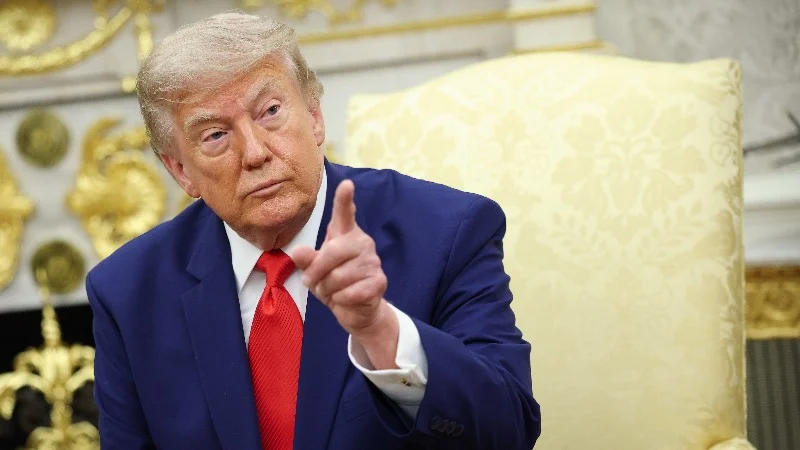
President Trump has refused to reveal exactly what kind of provocation would draw the US and Iran back into an all-out war.
Trump told a reporter, “You’ll find out,” when that moment is reached.
On Friday, US warplanes targeted three Iranian-linked tankers that were attempting to break the US blockade of the Strait of Hormuz.
Strikes on the ships by F/A-18 Super Hornets disabled them and prevented them from docking.
Roughly 15,000 troops are currently enforcing the blockade, which began on 13 April.
CENTCOM said US forces are preventing 70 ships from entering or leaving Iranian ports, with a capacity to transport oil worth $13 billion.
On Friday evening, the US was still awaiting a response from Iran to its latest peace-deal offer.
Support Alex Jones by picking up an all-new Alex Jones Live t-shirt, or a Trench War Dagger at TheAlexJonesStore.com.

One Response
can we be sure that it wasn’t another Israeli false flag?