


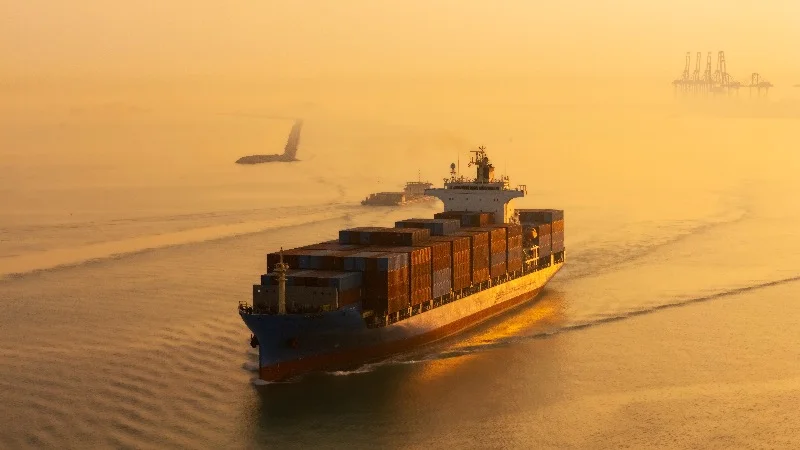


Iran and Oman’s foreign ministers discussed the freedom of navigation through the Strait of Hormuz in a phone call Thursday. The ability for ships to pass through the Strait is a key point of President Donald Trump’s Memorandum of Understanding [MOU], although the specifics of how this will be done are still being worked out.
“Omani Foreign Minister Badr bin Hamad Al Busaidi and Iranian Foreign Minister Seyed Abbas Araghchi ‘reached an understanding on a mechanism for joint cooperation aimed at achieving the objectives of the U.S.-Iran memorandum of understanding regarding freedom of navigation in the Strait of Hormuz’,” CBS News said Thursday.
The MOU is a 14-point agreement which effectively halted the Iran war. Points 3 to 5 of the document discuss the Strait:
3 — The Islamic Republic of Iran and the United States undertake to negotiate and reach a final agreement within a maximum period of 60 days, extendable by mutual consent.
4 — Immediately upon the signing of this Memorandum of Understanding, the United States lift the naval blockade and prevent any interference or obstruction against the Islamic Republic of Iran, and restore traffic within a maximum of 30 days to its full capacity; the traffic of ships shall be proportional to the pre-war volume of traffic on the part of the Islamic Republic of Iran. The United Statesalso undertakes to withdraw its forces from the surrounding areas within 30 days after the final agreement.
5 — Upon signing this Memorandum of Understanding, the Islamic Republic of Iran will immediately take steps to ensure that the movement of merchant ships from the Persian Gulf to the Sea of Oman and vice versa is resumed within 30 days to the pre-war volume, taking into account the need for the removal of technical obstacles and the neutralization of mines by Iran.
“The absence of tolls has been a key point of contention between the U.S. and Iran during negotiations. Oman had said earlier in the day it did not plan to impose any fees, though Iran has been more noncommittal in recent days, saying they could enforce fees after the current 60-day pause,” CBS News said.
Despite ships passing through Hormuz, the Strait is still not fully open as of Thursday, but it is likely that Iran is only preventing ships from passing through certain areas due the presence of mines.
“Three tankers that had been on track to leave the Persian Gulf through the Strait of Hormuz appeared to turn back Thursday, while three others appeared to divert, as Iran’s powerful Revolutionary Guard Corps issued a warning against using routes through the waterway not approved by Tehran,” CBS News said. “Tracking data from MarineTraffic.com showed three oil tankers heading toward the strait on a southern route that hugs the coast of Oman turn back in the other direction. Three other ships that had also been on the southern route appeared to divert to the north, toward the route designated by Tehran that skirts the Iranian coast.”





One Response
The Strait lies in Iran and Oman territory. They have a right to charge for passage.
Lots of misinformed people say the Strait is in international waters, it is not.